
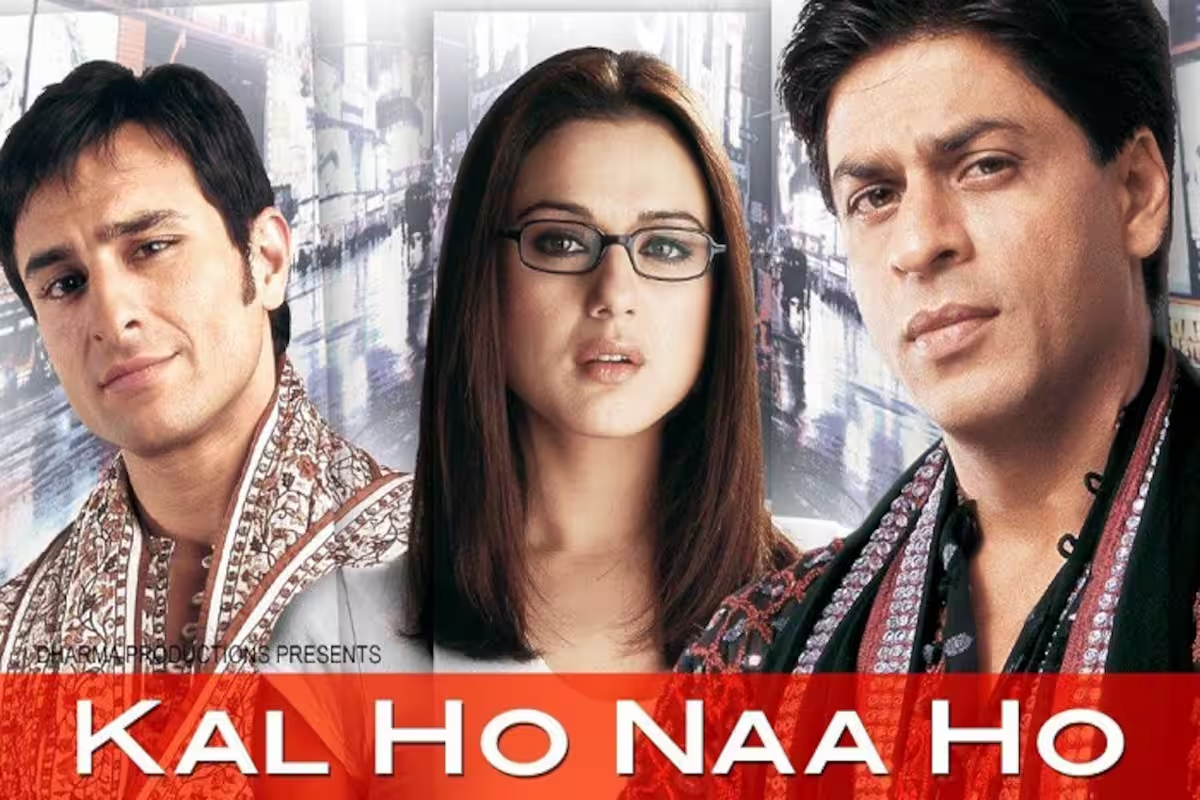
Director: Nikkhil Advani
Starring: Shah Rukh Khan, Preity Zinta and Saif Ali Khan
‘A Captivating Classic’
Not many actresses in India are as beloved as Preity Zinta. Ever since her rise towards recognition in the 1990’s, Zinta has become a beloved icon in Bollywood. Whether it is passionate lovers, historical figures or the lovers of soldiers, Zinta has played several strong characters. Arguably, Zinta’s finest strength as an actress has always been her strong dramatic range. She is one of those rare actresses that has always had a talent for portraying characters in various genres. Through her abilities to portray characters audiences can relate to, Zinta has become a beloved actress with value. Throughout a powerful career, Zinta has made many bold movies which are undeniably worth talking about.
I’m a huge fan of Zinta and adore all movies she has made in her career. However, “Kal Ho Naa Ho” definitely stands out as being her most meaningful film. Released in 2003, Nikkhil Advani’s movie offered a compelling portrait of terminal illness. Packed with bold music sequences, engaging storytelling and amazing acting, it’s an extraordinary Indian masterpiece about illness. At the centre of it all is a terrific performance by Preity Zinta, who portrays a woman that faces terminal illness trauma. Ultimately, the film delivers a strong message regarding terminal illness that would resonate with everyone. It’s a movie that emphasizes the importance of embracing raxh day with a positive attitude. Unlike most Bollywood movies, it tackles powerful themes which everyone would relate to. A captivating Indian classic about terminal illness, there are several strong reasons why it’s a movie worth seeing.
Nikhil Advani is a newcomer towards stories of dysfunctional families. Before he directed “Kal Ho Na Ho”, Advani has never created an Indian movie before. It was the director’s attempts to capture the lives of terminally ill men enduring barriers but he succeeds tremendously. Using spellbinding cinematography, Advani captures an Indian woman embarking on a journey to mend fractured relationships with her family. Visually, the film is a feast for the eyes which is as stunning as New York’s skies. Advani deftly employs montages to capture a woman whose outlook on life forever changes when she falls in love with a terminally man. For instance, the montages elevate the Kuch to Hoa Hai musical scene. During this unforgettable scene, Naina experiences a change in her attitude adopting a positive life outlook after meeting Aman. One admires montages capturing lives of women adopting a positive life perspective. Montages are complicated techniques to use in movies. As Farhan Akhtar’s “Dil Chahta Hai” proved clearly, montages elevate movies capturing friendships. Nevertheless, it works extremely well in this movie. Through stunning visuals, Advani captures the hardships which Indian women are facing.
Another admirable aspect of “Kal Ho Na Ho” worth discussing is production-design. From a technical perspective, the film is extremely well made. Advani successfully uses symbolism to capture strong bonds between Indian friends spending time together. Throughout the movie, Rohit’s diary becomes a strong symbol of his bond with Naina as a girl he which he values highly. For instance, the symbolism enhances the diary reading scene. During this powerful scene, Aman reads a diary entry expressing his love for Naina. One admires symbolism of the diary showcasing strong bonds between lovers bonding together. Through this clever symbolism, Advani captures powerful bonds between Indian couples seeking to make their dreams come true. Moreover, the music score is magnificent. Shankar Ehsaan Loy’s music is integral towards the success of the movie. It gives the movie a heartfelt atmosphere that captures the heavy burden terminally ill men bear. Through phenomenal production, Advani captures the lives of terminally ill patients that face destruction.
Storytelling is one of the key reasons why “Kal Ho Na Ho” is an Indian classic that’s engaging. The film is beautifully written, and successfully uses voice-over narration to capture the lives of women which adopt a positive perspective. Advani’s screenwriting strength is his ability to capture the lives of women adopting positive perspectives on life through using voice-over narration. Throughout the film, Naina tells her story about life through meaningful voice over narration. For instance, narration elevates the opening scene. During this memorable scene, Naina introduces viewers towards her life in India through meaningful voice over narration. One admires narration capturing the lives of women adopting a positive point of view on life. Voice-over narration is a tricky technique to use effectively in Bollywood films. When it’s used excessively, it can often come across as an unnecessary distraction. As Nitesh Tiwari’s “Dangal” suggested clearly, narration elevates sports films. Nevertheless, the narration works immensely in this film. Through a spectacular screenplay, Advani captures lives of terminally ill patients facing a price to pay.
One appreciates amazing acting.
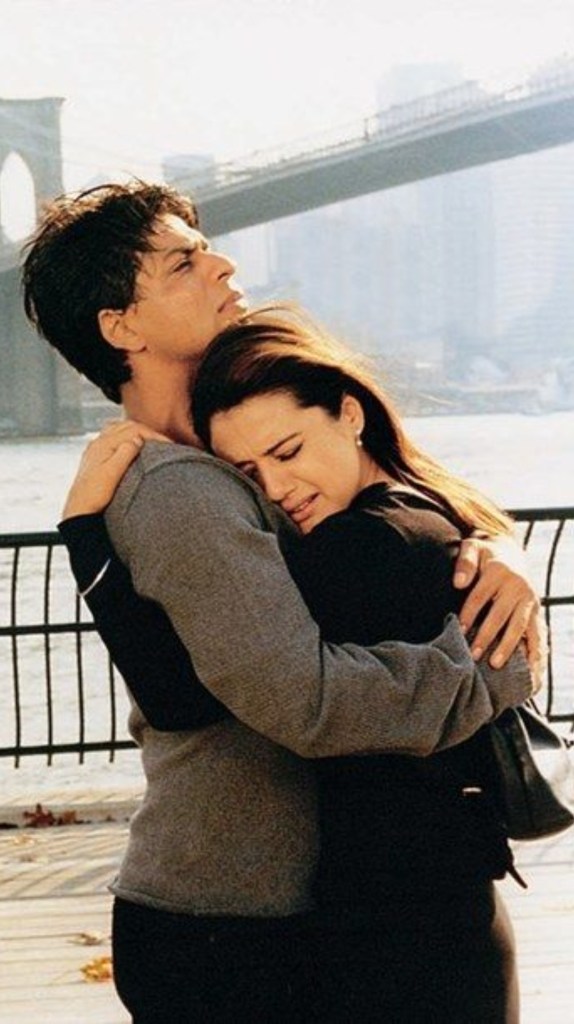
Preity Zinta delivers one of her best career performances as Naina. Zinta first achieved appreciation for playing romantic heroines in classic Bollywood movies. With “Kal Ho Naa Ho”, however, she took on her most complex role. It isn’t simple to portray a woman struggling to confront a terminal illness but she succeeds. This is the actress unlike you have ever seen her before: bold, emotional and vulnerable in her most iconic role. With riveting expressions, she captures the angst, frustration and grief of a woman struggling to cope with family dysfunction. It’s a phenomenal performance from one of the finest actresses in India today.
The supporting cast is spectacular and also worthy of appreciation. Shah Rukh Khan is terrific, capturing charisma of a terminally ill man struggling to conceal his condition that causes a dilemma . Saif Ali Khan is brilliant, capturing the bright personality of a man which falls in love with a girl which he plans to marry. Lastly, Jaya Badhuri deserves appreciation. As the joyous matriarch of the Kapur family, she brings heartfelt emotion to the movie.
Finally, “Kal Ho Na Ho” will earn praise of everyone for capturing terminally ill lovers facing sorrow. Unlike most Bollywood movies, the movie tackles strong themes everyone will relate to. The film discusses strong themes of identity, romance and class which will resonate with everyone.
Fans of Preity Zinta will absolutely enjoy “Kal Ho Naa Ho” and so would audiences seeking heartfelt entertainment. A riveting Bollywood classic, it honours an actress that’s iconic.
Nearly 25 years following the release of an iconic Bollywood movie about a terminally ill man struggling to cope with a condition that is tragic, it’s a fantastic reminder about an iconic Indian actress that has made terrific movies throughout her career which haven’t ever lost their abilities to endlessly captivate the public.
5/5 stars

 The Film Buff