
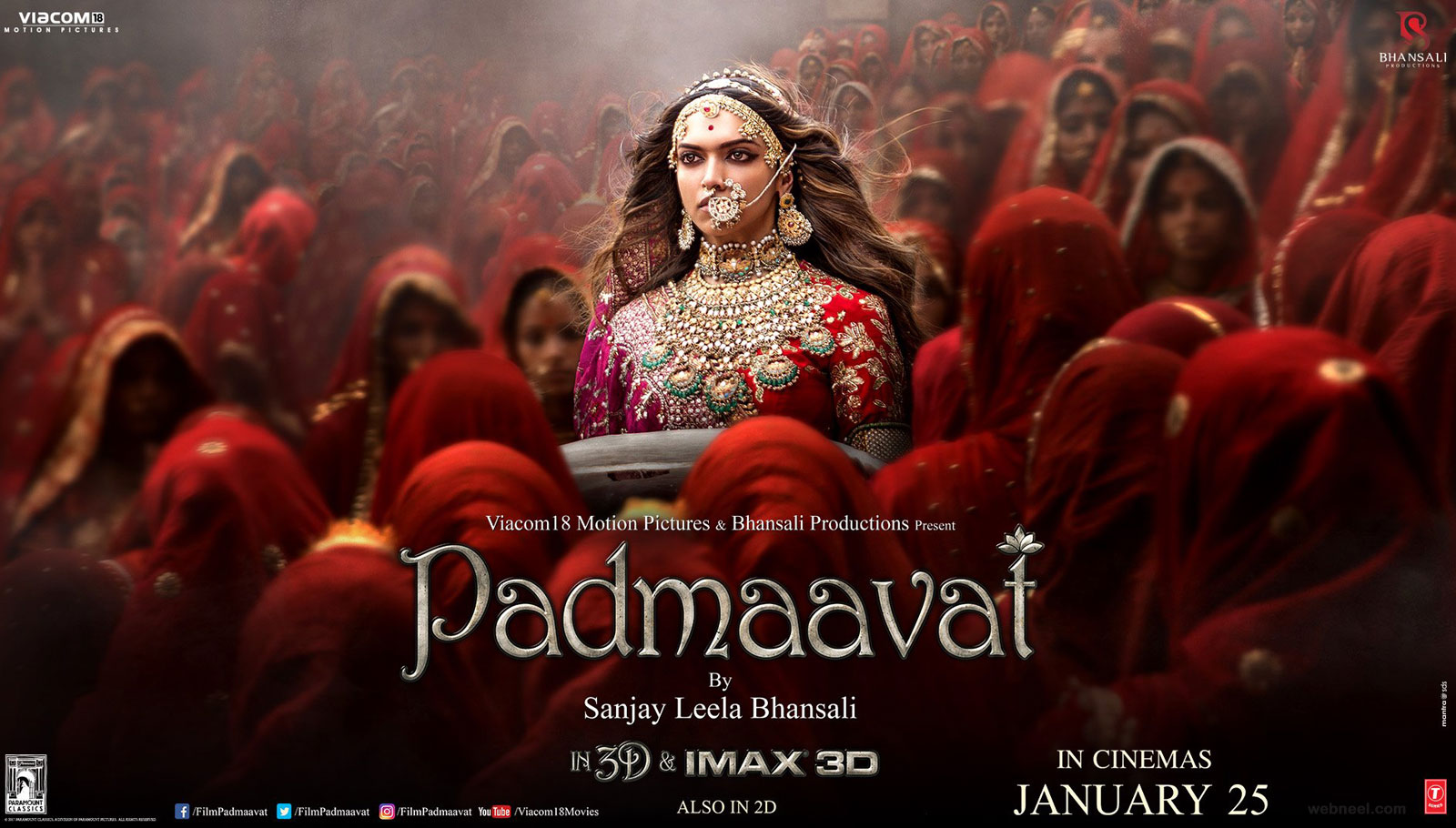
Writer/Director: Sanjay Leela Bhansali
Starring: Deepika Padukone, Shahid Kapoor and Ranveer Singh
‘A Captivating Period Piece’
Few actresses in Bollywood are as beloved as Deepika Padukone. Ever since her rise towards stardom in the 2000’s, Padukone has become one of the best actresses in the Indian industry. Whether it’s star-crossed lovers, teenagers or women facing marriage disaster, Padukone has proven that she has the ability to portray many bold characters. Padukone’s finest strength as an actress is versatility. Through strong ability to portray characters in a variety of genres, Padukone has proven to be an iconic actress in India. She is one of those actresses that has the ability to command every scene through her strong presence. An actress with undeniable charisma, Padukone has become an icon in India. Throughout her career, Padukone has produced several unforgettable movies that are certainly worth watching.
I’m a big fan of Padukone and adore all the movies which she has created in her career. However, “Padmaavat” definitely stands out as being her most ambitious film. Released in 2018, Sanjay Leela Bhansali’s film offered a powerful portrait of legendary queens that ruled Indian history. Packed with engrossing production design, stirring storytelling and strong acting, it’s an exceptional Bollywood historical drama. At the centre of it all is a terrific performance by Deepika Padukone, who embodies a legendary queen in Indian history. Although “Padmaavat” is a riveting Indian period drama, it isn’t a flawless film. It suffers from uneven pacing that tests the viewer’s patience. Nevertheless, it provides epic entertainment that will satisfy fans of Deepika Padukone.
Set in 13th Century India, “Padmaavat” tells the story of a queen that faces a perplexing dilemma. Deepika Padukone plays Queen Padmaavat, a majestic princess that is in charge ruling a kingdom. Padmaavat has thrived at ruling her kingdom without ever facing any problem. However, Padmaavat’s life forever changes when she becomes the target of a terrifying dictator. Alauddin Khilji (Ranveer Singh) is a tyrannical ruler that is seeking to take advantage of Padmaavat. As her life is put in danger, Padmaavat soon is forced to wonder whether it’s possible for her to be a ruler. Faced with a problem, she wonders whether she would ever be able to rule her kingdom.
Sanjay Leela Bhansali is fascinated with the historical genre. A bold Bollywood director, Bhansali has often made engaging movies about kingdoms in grave danger. His iconic film “Devdas” offered a powerful portrait of lovers torn apart by alcoholism amid 1900s India. With “Padmaavat”, however, Bhansali directed his first ever historical epic. It was the filmmaker’s first attempt to capture the lives of ancient queens that rule kingdoms in 19th Century, but he succeeded immensely. Using engaging cinematography, Bhansali captures a queen embarking on a journey to discover her identity. Inspired with Ashutosh Gowariker’s “Jodhaa Akbar”, Bhansali uses montages to capture a queen seeking to be in positions of power. For instance, montage enhances the kingdom ruling scene. During this unforgettable scene, Padmaavat gives an emotional speech to people in kingdom. Montages are tricky techniques. As Aryan Mukerji’s “Yeh Jawaani Hai Deewani” did prove clearly, montages elevate Bollywood movies about friendships. Nevertheless, it works immensely in this movie. Using strong visuals, Bhansali captures tensions queens in India are facing.
Another admirable aspect of “Padmaavat” that merits appreciation is the production. From a technical perspective, it’s one of the best historical dramas that you will ever see. Bhansali has often had an eye for designing captivating production for his movies, and “Padmaavat” is no exception. Throughout the movie, Padmaavat’s costumes exhibit her status as a queen in a position of power. For instance, the costumes elevate the Khilji meeting scene. During this engaging scene, Padmaavat has a tense confrontation with Khilji testing her authority as a queen. Using strong costumes, Bhansali crafts a portrait of queens which is compelling. Furthermore, the musical score is magnificent. Bhansali’s music is key to the success of the movie. It gives the film a tense atmosphere capturing the burden queens bear. Through engaging production, Bhansali captures queens which rule a nation.
Storytelling is one of the main reasons why “Padmaavat” is a Bollywood historical film that’s engaging. Bhansali’s finest strength as a screenwriter is his abilities to capture the tension queens are facing by dramatic monologues. Inspired with Shekhar Kapur’s “Elizabeth”, Bhansali uses monologues to capture hardships queens are facing. For instance, the monologues elevate the Khilji speech scene. During this tense sequence, Khilji delivers an emotional speech showing his strong emotions concerning Padmaavat. Through engrossing dramatic monologues, Bhansali creates a portrait of queens which audiences relate to. Monologues are a tricky technique. As Farah Khan’s “Om Shanti Om” suggested, monologues elevate Bollywood movies about reincarnation. Nevertheless, it works immensely in this movie. Through an engaging screenplay, Bhansali captures the lives of queens which face a painful price to pay.
One appreciates amazing performances.

Deepika Padukone delivers one of her best career performances as Queen Padmavati. Padukone first earned appreciation playing romantic heroines in Bollywood films. With “Padmaavat”, however, she took upon her most complex role. It isn’t easy to portray a celebrated queen in Indian history but she succeeds tremendously. This is the actress unlike you’ve ever seen her before: intense, charismatic and emotional in her most bold role. With riveting expressions, she captures the angst, bravery and grief experienced by a queen in Indian history. It’s a phenomenal performance from one of the most beloved actresses in India today.
While the film is mainly a bold showcase for Padukone, the supporting cast is also stellar and worthy of appreciation. Ranveer Singh is remarkable, capturing villainous nature of a tyrannical dictator that puts Padmaavat’s life in grave danger. Shahid Kapoor is stellar, capturing the charismatic nature of a king in charge of ruling a kingdom that’s crumbling. Lastly, Jim Sarbh merits appreciation. As an Indian prince, he is unforgettable.
Despite its superb performances, however, “Padmaavat” can’t quite honour the legacy of a bold queen in Indian history. If there’s a minor shortcoming to the movie, it lacks any strong pacing. Bhansali’s choice to integrate subplots about romantic affairs into the film is bold but hinders the pacing. Due towards this faulty decision, scenes capturing Queen Padmavati’s romantic relationships are not as entertaining as her kingdom journey. As Imtiaz Ali’s “Love Aaj Kal” proved, subplots about romantic affairs enhance Bollywood romantic dramas. Therefore, “Padmaavat” is one of those Bollywood historical movies not everyone will adore.
Nevertheless, fans of Deepika Padukone will absolutely enjoy “Padmaavat” and so would audiences that seek historic entertainment. A breathtaking Bollywood historical drama, it honours an actress that’s beloved in India.
Nearly 8 years after the release of a grand Bollywood historical film about a legendary queen seeking to rule kingdoms that prove part of her routine, it’s a bold reminder of a beloved Indian actress that has created an enduring legacy by making memorable films which absolutely without a doubt demand to be seen on the big-screen.
4/5 stars


