
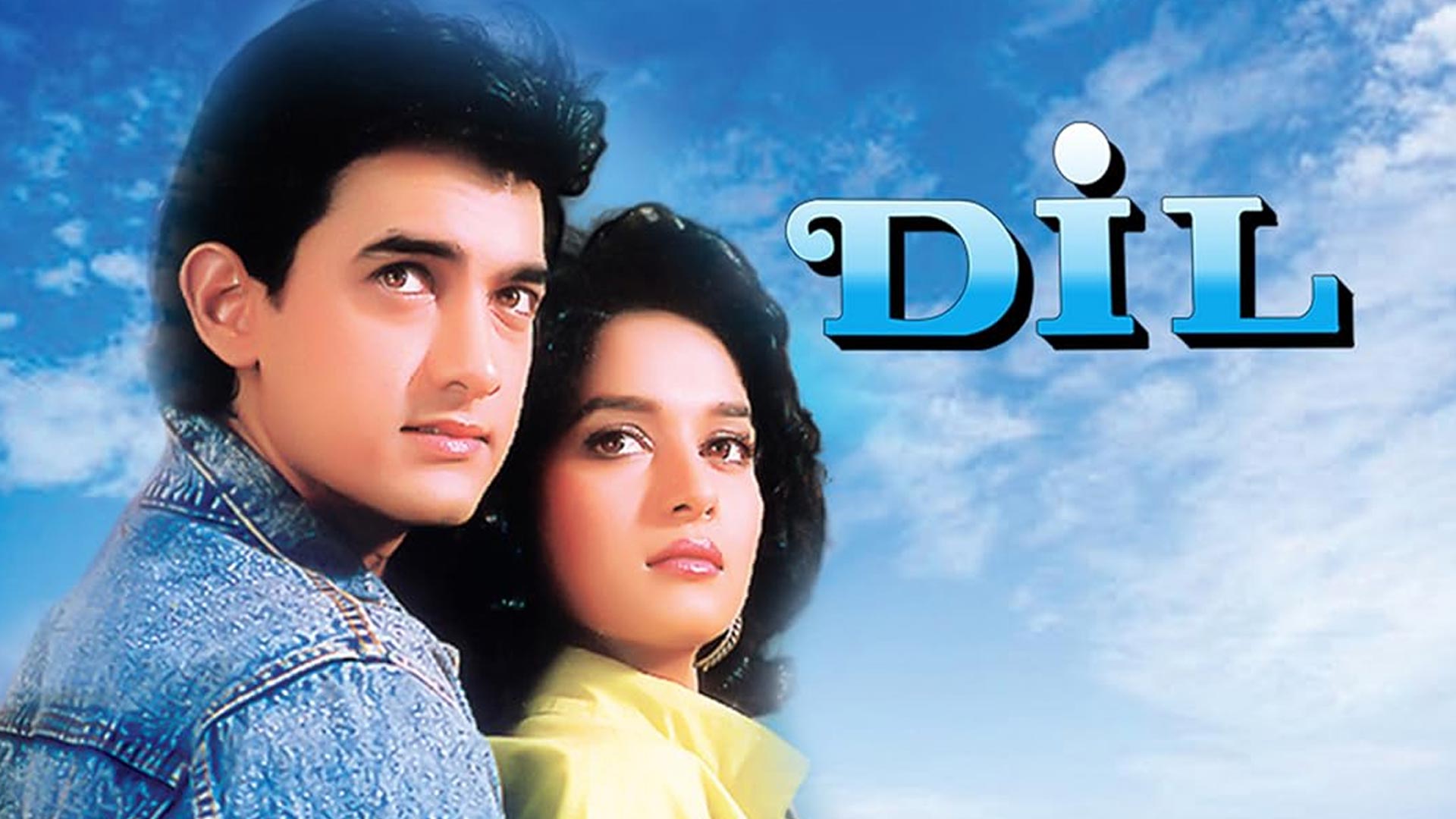
Director: Indra Kumar
Starring: Aamir Khan, Madhuri Dixit and Anupam Kher
‘A Captivating Bollywood Classic’
Few actors in Bollywood are as celebrated today as Aamir Khan. Ever since his rise to stardom in the 1990’s, Khan has proven to be one of the greatest actors in Bollywood. Whether it’s star-crossed lovers, terrorists in danger or professional wrestlers, Khan has suggested he can portray many characters. Arguably, Khan’s strength as an actor is his bravery. Khan has never been afraid to take risks in his career through tackling subjects that prove controversial. Through abilities to play characters which are compelling, Khan has established a legacy which has proven to be compelling. Despite reaching the age of retirement, Khan has never lost his strong passion for producing iconic entertainment. An iconic legend in India, Khan has become a celebrated legend in Bollywood Cinema. Throughout a groundbreaking career, Khan has created several strong movies that are worth watching.
I’m a huge fan of Khan and adore all movies he has made in his career. However, “Dil” is definitely his most overlooked film. Released in 1990, Indra Kumar’s film offered a strong portrayal of lovers torn apart by social class barriers. Packed with engaging production, strong storytelling and powerful acting, it is a remarkable Indian romantic drama. At the centre of it all is a dazzling performance by Aamir Khan, who portrays a college student that falls in love with his rival. Although “Dil” is an engaging Indian romantic drama, it is not a flawless film. It builds a melodramatic conclusion that lacks satisfying resolutions. Nevertheless, it offers strong entertainment which would definitely satisfy fans of Aamir Khan.
“Dil” tells the story of a poor college student that has dreams to fulfill. Aamir Khan plays Raja Prasad, a poverty-stricken teen that is in search of happiness. Raja has always had a complicated relationship with his wealthy classmate Madhu (Madhuri Dixit). Madhu is a rich woman that comes from an affluent family in Indian society. Despite their initial hatred for each other, Raja soon falls deeply in love with Madhu. However, the barriers of social class threaten to destroy their bonds forever. When Madhu’s dad (Saeed Jaffrey) discovers their affair, Raja’s dreams endure despair. Facing a dilemma, Raja is forced to question whether he will ever be able to love a woman from a vastly different social class in India.
Indra Kumar is a newcomer towards themes of social class. Before he made “Dil”, Kumar had never directed a Bollywood movie in his career. “Dil” marked his debut and foray into Bollywood. It was the director’s first attempt to capture the lives of lovers which are torn apart by social class in Indian society but he succeeded. Using stunning cinematography, Kumar captures lovers that face barriers of social disparity. Evoking James Cameron’s “Titanic”, Kumar effectively uses montages to capture lovers torn apart by social class that’s catastrophic. For instance, montages elevate the college meeting scene. During this unforgettable scene, Raja and Madhu have a series of intense meetings arguing over their social class. Using breathtaking montages, Kumar crafts a portrait of social class that’s engaging. Montages are tricky techniques. As Farhan Akhtar’s “Dil Chahta Hai” suggested, montages enhance Indian movies about friendships. Nevertheless, it works immensely. Using captivating visuals, Kumar captures social class barriers lovers are facing.
Another strong aspect of “Dil” that merits appreciation is production. Kumar deftly uses cross-cutting to construct engaging musical sequences about social class. For instance, the cross-cutting enhances the Mujhe Neend Na Aaye musical sequence. During this unforgettable scene, Raja has a romantic encounter with Madhu by singing a song. Through cross-cutting, Kumar crafts musical sequences about social class that are compelling. Moreover, the musical score is magnificent. It gives the movie an intense atmosphere capturing a heavy burden that doomed lovers bear. Through extraordinary production, Kumar captures lovers that are torn apart by class tension.
Storytelling is one of the main reasons why “Dil” is a Bollywood movie that’s engaging. The film is beautifully written, and expertly uses dramatic monologues to capture the lives of lovers torn apart by the barriers of social class. For instance, the monologues enhance the family argument scene. During this unforgettable scene, Raja delivers an emotional monologue showcasing his love for Madhu towards her disapproving family. Through monologues, Kumar constructs a portrait of social class that audiences can relate to. Dramatic monologues are tricky. As Ashutosh Gowariker’s “Lagaan” proved, monologues elevate Bollywood films about cricket. Nevertheless, it works immensely in this film. Through a spectacular screenplay, Kumar captures social class barriers which come with a price to pay.
One appreciates amazing performances.

Aamir Khan delivers one of his best career performances as Raja. Khan first achieved appreciation for playing serious heroes in Bollywood crime films. With “Dil”, however, he took on his most complex role. It is not simple to play a college student affected by barriers of social disparity but he succeeds tremendously. This is the actor unlike you’ve ever seen him before: intense, charming and emotional in his most memorable role. With riveting expressions, he captures the angst, bravery and grief of a college student facing tensions. It’s a powerful performance from one of the most commemorated actors that is working in Bollywood today.
While the movie is mainly a showcase for Aamir Khan, the supporting cast is superb and worthy of appreciation. Madhuri Dixit is magnificent, bringing charisma to a wealthy woman that falls in love with a poor college classmate causing adversity. Anupam Kher is astonishing, capturing despair of a father struggling to care for a poor family that’s a burden to bear. Lastly, Saeed Jaffrey merits appreciation. As a disapproving father, he is unforgettable.
Despite its strong performances, however, “Dil” can’t quite capture the lives of lovers that have dreams to fulfill. If there’s a major shortcoming to the film, it lacks an engaging ending. It’s a melodramatic conclusion that lacks a truly satisfying resolution. Whereas this over-the-top ending enhanced Mansoor Khan’s “Qayamat Se Qayamat Tak”, it feels out of place in this film. At worst, it offers up misleading messages about social class in India which aren’t true to reality. Therefore, “Dil” is one of those Bollywood films which not everyone will adore.
Nevertheless, fans of Aamir Khan will enjoy “Dil” and so would movie-goers which seek riveting entertainment. A riveting Bollywood romantic drama, it celebrates an actor that is beloved in India.
Nearly 30 years following the release of a groundbreaking Bollywood film about two lovers torn apart by a social class barrier, it’s a breathtaking reminder of a legendary Indian actor that has built a lasting legacy through his abilities to portray compelling characters in iconic movies throughout his career audiences treasure.
4/5 stars


