
Writer/Director: Emerald Fennell
Starring: Margot Robbie, Jacob Elordi and Hong Chau

‘A Beautiful Adaptation’
When it comes to the greatest books ever written about lovers reaching soaring heights, it’s worth discussing “Wuthering Heights”. Published in 1847 by Emily Bronte, it’s considered iconic literature today. On a personal level, I find the novel relatable. At an early age, I fell in love with a wealthy girl in past lives with dreams of marriage. A girl with pride, she tried her best to treat everyone fairly by setting social class prejudice aside. Far from a little woman, she was a wealthy socialite that earned every boy’s attention. Like Catherine Earnshaw, she was a woman without a single flaw. Raised in a wealthy family, she had sense and sensibility of a woman from the 19th Century. Showing great expectations, her parents wanted her to become married to rich men following societal traditions. Her stern parents would discern suitability of lovers based solely on money they would earn. Holding standards that were unreasonable, her parents showcased disapproval of lovers they rarely considered suitable. Despite differing social standing, we formed bonds that seemed lasting. I loved spending remains of the day with a girl admiring books in every way. Sharing lifelong love for literature, we got along well together. Even when I wasn’t wealthy, she always treated me nicely as if I was a member of her family. However, class barriers broke bonds forever. News of her rich boyfriend brought relationships to an end. Concerned with social standing, her strict parents forbade us from ever meeting. Feeling burdened, our bond became gone with the wind. Recorded in a notebook, all I have are faded memories of a girl that changed my outlook. Looking back in reflection, I treasure a promising young woman. As tragic as the Titanic, our bond proved catastrophic. Longing for love which couldn’t be, I wondered whether relationships would have lasted had I been wealthy. Years later, I treasure literature that reminds me of a doomed lover.
Now, Emerald Fennell honours the book about soaring heights in her film “Wuthering Heights”. Released in 2026, Fennell’s film celebrates literature. Packed with breathtaking sets, engaging storytelling and phenomenal acting, it’s an awe-inspiring adaptation. At the centre of it is Margot Robbie, embodying a legendary literary heroine. Although “Wuthering Heights” is an amazing adaptation, it isn’t flawless. It’s unevenly paced, and suffers from needless subplots. Nevertheless, it offers engaging entertainment for fans of the book.
Set in the 19th Century, “Wuthering Heights” follows lovers engaging in fights. Margot Robbie embodies Catherine Earnshaw, a wealthy woman whose beauty inspires awe. Cathy shares relationships with childhood friend Heathcliff (Jacob Elordi), whom she loves dearly. However, Cathy’s life changes when she becomes married to a wealthy landowner. Facing obstacles proving challenging, Cathy is torn between childhood love and social standing. Questioning social status, Cathy struggles abandoning childhood love that’s precious.
Emerald Fennell is fascinated with social class. Her award-winning film “Saltburn” captured hardships faced by upper-class families with income to earn. With “Wuthering Heights’, however, Fennell has created her first adaptation. It’s the filmmaker’s first attempt adapting a legendary book, but she succeeds. Using captivating cinematography, Fennell captures a woman embarking on a journey in the 19th Century. Evoking Joe Wright’s “Pride & Prejudice”, Fennell uses foggy weather to capture lovers facing class prejudice. For instance, foggy weather elevates the reunion scene. During this unforgettable scene, Cathy reunites with Heathcliff following years of separation amidst foggy weather. It brought back memories of my bond with a wealthy girl that shaped my identity. Fog weather is a complicated technique. As David Lean’s “Great Expectations” suggested, foggy weather elevates Charles Dickens adaptations. James Cameron’s “Titanic” suggested that foggy weather elevates disaster movies. Nevertheless, it works tremendously. Through breathtaking visuals, Fennell captures class tensions lovers are facing.
Another admirable aspect of “Wuthering Heights” that merits appreciation is production. Evoking Greta Gerwig’s “Little Women”, Fennell effectively uses set-design capturing luxurious homes of wealthy little women. Throughout the movie, the Thrushcross Grange estate plays pivotal roles showcasing Cathy’s social standing. For instance, the estate location elevates the rejection scene. During this unforgettable scene, Heathcliff is heartbroken when he’s rejected by Cathy discovering she has been married in a rich estate. It reminded me of my grief being rejected by a wealthy girl due to social status leaving me devastated. Moreover, the musical score is extraordinary. Charlie XCX’s commemorated music contributes to success of the movie. Modern songs give the film nerve-wracking atmosphere capturing hardships doomed lovers bear. Using phenomenal production, Fennell honours commemorated books about social class tension.
Storytelling is one of the main reasons why “Wuthering Heights” is a literary adaptation that’s engaging. Most adaptations of Wuthering Heights rarely address social class tension. For instance, Peter Kosminsky’s “Wuthering Heights” portrayed lovers in relationships without any fights. Thankfully, though, Fennell avoids pitfalls. Evoking Celine Song’s “Past Lives”, Fennell uses flashbacks capturing bonds between lovers reminiscing past lives. For instance, flashbacks elevate the opening scene. During this unforgettable scene, Cathy recalls memories seeing Heathcliff being abused by her stern parents. It reminded me of a wealthy girl whose parents showcased disapproval of lovers causing hardships. Flashbacks are tricky. As James Ivory’s “The Remains of the Day” suggested, flashbacks elevate period pieces about butlers. Nick Cassavetes’ “The Notebook” proved that flashbacks elevate romantic novel adaptations. Nevertheless, it works immensely. Through a spectacular screenplay, Fennell honours a book that’s beloved today.
One appreciates astonishing performances.
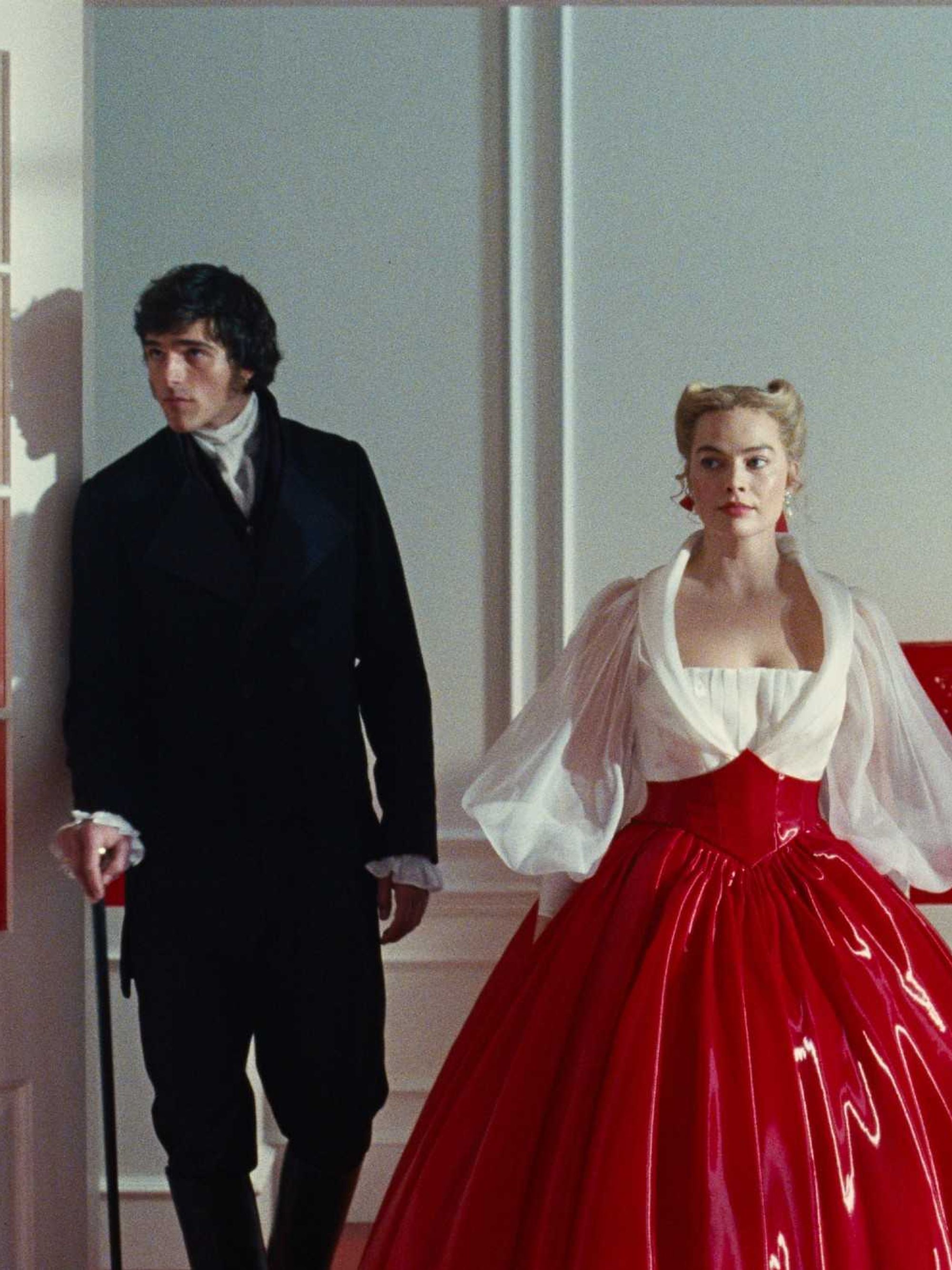
Margot Robbie delivers one of her best career performances as Catherine Earnshaw. Robbie earned appreciation for playing comic-book heroines. With “Wuthering Heights”, however, she took on her most complex role. It’s challenging embodying a commemorated literary heroine but Robbie succeeds. Evoking Kate Winslet in Ang Lee’s “Sense & Sensibility”, Robbie embodies the sense and sensibility of a woman in the 19th Century. With riveting expressions, she embodies ambitions, frustration and resentment of a wealthy woman experiencing class tensions. It’s a phenomenal performance from one of the finest actresses today.
Jacob Elordi is extraordinary as a heartbroken lover facing social inequality. While Robbie gets the showier role, Elordi is equally excellent as a lover facing a toll. Emulating Leonardo DiCaprio in Baz Luhrmann’s “The Great Gatsby”, Elordi embodies a lover that faces social class disparity. As Heathcliff, Elordi showcases his talent for creating heartbroken heroes through strong body language. Whether he’s gazing with longing at Catherine when they are reuniting or criticizing her higher social standing, Elordi uses his body language to create a character that’s compelling. It’s a powerful performance that celebrates a literary character.
Despite its extraordinary performances, however, “Wuthering Heights” can’t quite honour a legendary book about soaring heights. Fennell’s decisions integrating subplots about abusive marriages into the movie is bold but hinders the pacing. Due to this faulty technique, scenes capturing Heathcliff’s marriage with Isabella aren’t as engaging as his interactions with Cathy. As Victor Fleming’s “Gone With the Wind” suggested, subplots about abusive marriages elevate historical films. Emerald Fennell’s “Promising Young Woman” suggested that abuse subplots elevate satires. Moreover, the film lacks a compelling ending. It’s a melodramatic conclusion without a satisfying resolution. At worst, it deviates from the source material which may not please fans of the novel. Therefore, “Wuthering Heights” can’t quite honour a book that readers adore.
Nevertheless, fans of the legendary book would definitely appreciate “Wuthering Heights” and so would movie-goers seeking old-fashioned entertainment. An awe-inspiring literary adaptation, it honours a book deserving celebration.
Centuries following the publication of a book about women that are torn apart from lovers by social class tension, it’s a stirring reminder that classic literature is worth adapting into movies for a modern-day generation.
As strong as Heathcliff’s love for Cathy, it has inspired me to recover several years after ending relationships with a wealthy girl raised in aristocratic families that experienced barriers of social inequality by treasuring memories of a commemorated companion inspiring my love for literature I regard highly.
4/5 stars

 The Film Buff