
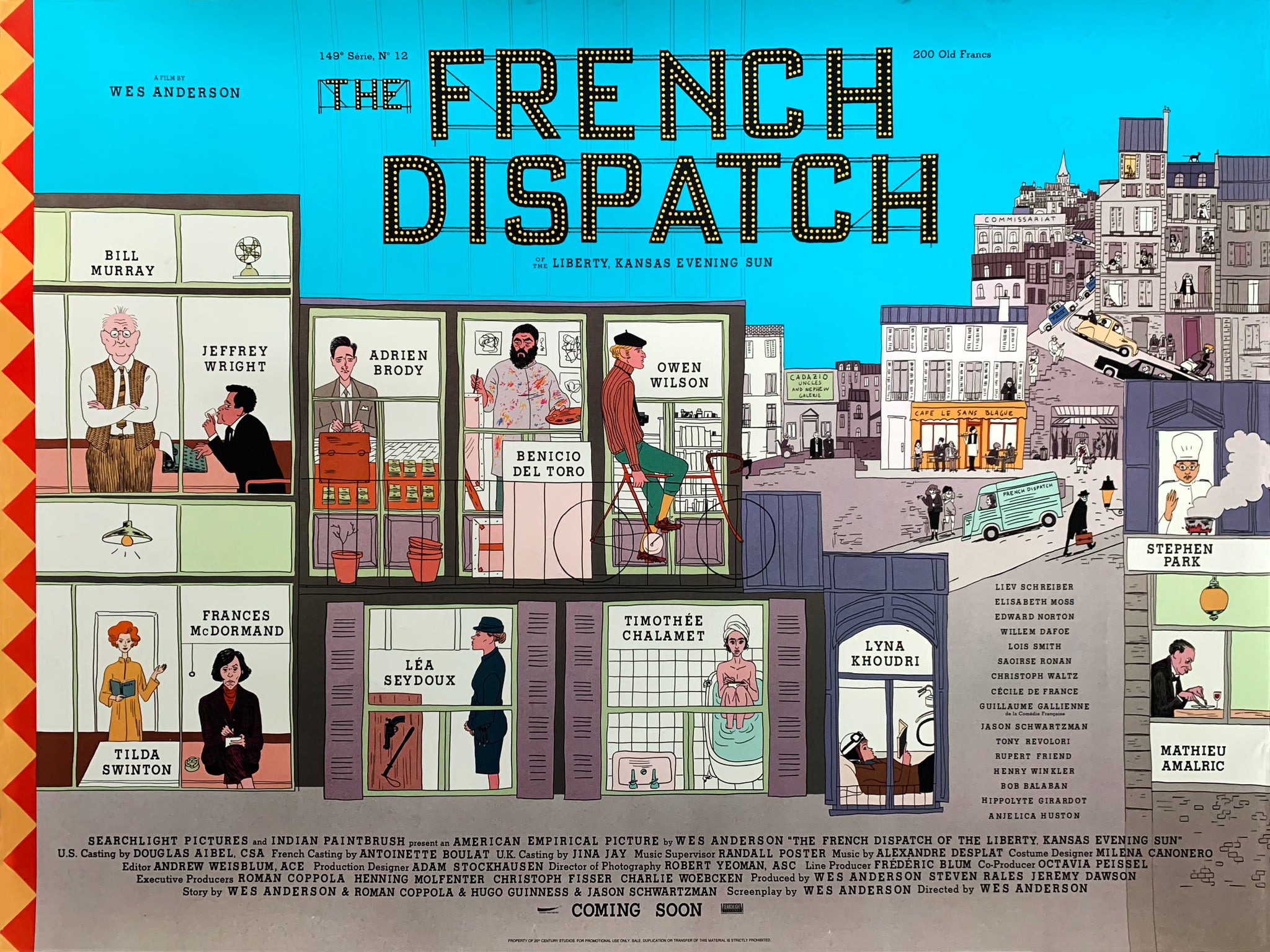
Writer/Director: Wes Anderson
Starring: Willem Dafoe, Adrien Brody and Tilda Swinton
‘A Captivating Classic’
Not many actors that achieved fame years ago are as beloved as Willem Dafoe. Ever since his recognition in the 1980’s, Dafoe has become a beloved icon. Whether it is detectives inspecting murders, psychotic killers or green goblins, Dafoe has played several characters. Arguably, Dafoe’s finest strength as an actor has always been his strong commitment to his craft. He is one of those rare actors that has always had the talent for stealing the show in supporting roles which have limited screen-time. Even when he isn’t a focus of a movie, Dafoe has often left a lasting impression. Although he is most well-known for his famous role as Green Goblin within the Spider-Man movies, Dafoe has proven he can make engaging movies in every genre. Throughout his long-lasting career, Dafoe has created several memorable movies which are worth talking about.
I’m a huge fan of Dafoe and admire all the movies which he has created in his career. However, “The French Dispatch” is truly my favourite. Released in 2021, Wes Anderson’s film offered a powerful portrait of a French magazine. Packed with strong production, engaging storytelling and powerful acting, it’s one of the best period pieces ever made. At the centre of it all is a bold performance by Willem Dafoe, who embodies an owner of a French store that faces sorrow. Ultimately, what makes “The French Dispatch” a true masterpiece is its universal appeal. Unlike most Wes Anderson movies, it tackles bold themes everyone would relate to. A riveting masterpiece about a magazine, there are countless strong reasons why “The French Dispatch” is a commemorated movie that’s worth watching.
Set in Paris, “The French Dispatch” tells the story of a magazine that experiences a bad batch. Willem Dafoe portrays Albert, a bold owner of a French store. Albert has always had lifelong passion for running a magazine that he regards with affection. However, his life drastically changes when his magazine hires a new editor. Faced with a newfound competitor, Albert wonders whether it’s truly possible to achieve success in a profession in pressure. Facing a stressful magazine, he is forced to question whether it’s possible to maintain a routine. Questioning his place in Paris, Albert questions his devotion towards a magazine he used to cherish.
Wes Anderson has always been fascinated by the stories of journalists. A phenomenal filmmaker, Anderson has often made great films about journalists facing disaster. His iconic film “The Royal Tenenbaums” offered a powerful portrait of a dysfunctional family that runs a journalist business experiencing big adversities. With “The French Dispatch”, however, Anderson created his first French period piece. It was the director’s attempt at capturing the struggles faced by magazine editors in France but he succeeded. Using strong cinematography, Anderson captures a French magazine editor facing adversity. Recalling Woody Allen’s “Midnight in Paris”, Anderson effectively uses locations in Paris to capture tensions experienced by French magazine editors. For instance, the French locations elevate the magazine publication scene. During this memorable scene, Albert oversees the creation of his magazine that he cares about deeply. French locations are tricky techniques to use in movies. As Brad Bird’s “Ratatouille” proved, French locales enhance animated movies about cooking. However, it works immensely. Using strong visuals, Anderson captures tensions which editors are facing.
Another admirable aspect of “The French Dispatch” that merits appreciation is the production. From a technical perspective, it’s one of the best period pieces which is ever made. Anderson effectively employs costumes to capture the hardships which owners of prestigious magazines are facing. Throughout the movie, Albert’s costumes showcase his strong transformation into a bold magazine editor that’s respected. For instance, costumes elevate the magazine business meeting scene. During this bold scene, Albert has a tense business meeting with his associates that’s compelling. Using stunning costumes, Anderson constructs a portrait of magazines which is engaging. Moreover, the musical score is marvellous. Alexandre Desplat’s music contributes to the success of the movie. It gives the movie tense atmosphere capturing the burden that magazine editors bear. Through captivating production, Anderson captures magazines facing tension.
Storytelling is one of the main reasons why “The French Dispatch” is a movie about a magazine that’s compelling. The movie is beautifully written, and effectively employs silence to capture tensions that magazine editors experience. Evoking Tom McCarthy’s “Spotlight”, Anderson effectively employs sequence of silence to capture obstacles which journalists often fight. For instance, silence enhances the magazine farewell scene. During this heartfelt scene, Albert bids emotional farewells to his magazine following his retirement. Through silence, Anderson creates a portrait of magazines that audiences can relate to. Silence is a tricky technique to use in film. As Yorgos Lanthimos’ “Poor Things” demonstrated, silence enhances adaptations of famous feminist books. Nevertheless, it works well with this movie. Through an extraordinary screenplay, Anderson captures magazine editors facing a price to pay.
One appreciates amazing performances.

Willem Dafoe delivers one of his greatest performances as Albert. Dafoe achieved praise for portraying menacing villains in comic-book movies. With “The French Dispatch”, however, he took on his most complex role. It isn’t simple to portray a magazine editor facing adversity but he succeeds tremendously. This is the actor unlike you’ve ever seen him before: intense, charming and emotional in his most iconic role. With riveting expressions, he captures the angst, bravery and resentments of a magazine editor experiencing tensions. It’s a phenomenal performance from one of the best actors today.
While the movie is mainly a showcase for Willem Dafoe, the supporting cast is also amazing and worthy of appreciation. Tilda Swinton is terrific, bringing charisma to a magazine editor that endures a dilemma. Timothee Chalamet is compelling, capturing the way in which a writer is affected by his job with low pay. Last, Frances McDormand merits appreciation. As a female newspaper editor, she is unforgettable.
Finally, “The French Dispatch” would earn the appreciation of everyone for capturing magazines that face a rough patch. Unlike most Wes Anderson films which are often targeted to a small audience, it discusses bold themes everyone would relate to. The film discusses strong themes such as angst, mental health and profession which would resonate with everyone. It delivers a strong message about professional success that will resonate with everyone. Therefore, “The French Dispatch” is one of those rare films everyone will adore.
Fans of Willem Dafoe would definitely enjoy “The French Dispatch” and so will movie-goers seeking exhilarating entertainment. A powerful period drama, it honours an actor with charisma.
A fantastic portrait of a French magazine that faces tensions creating articles in a routine, it’s a riveting reminder of an actor that has built a successful career through his abilities to make memorable films that absolutely without a doubt deserve to be seen on the big-screen.
5/5 stars

 The Film Buff