
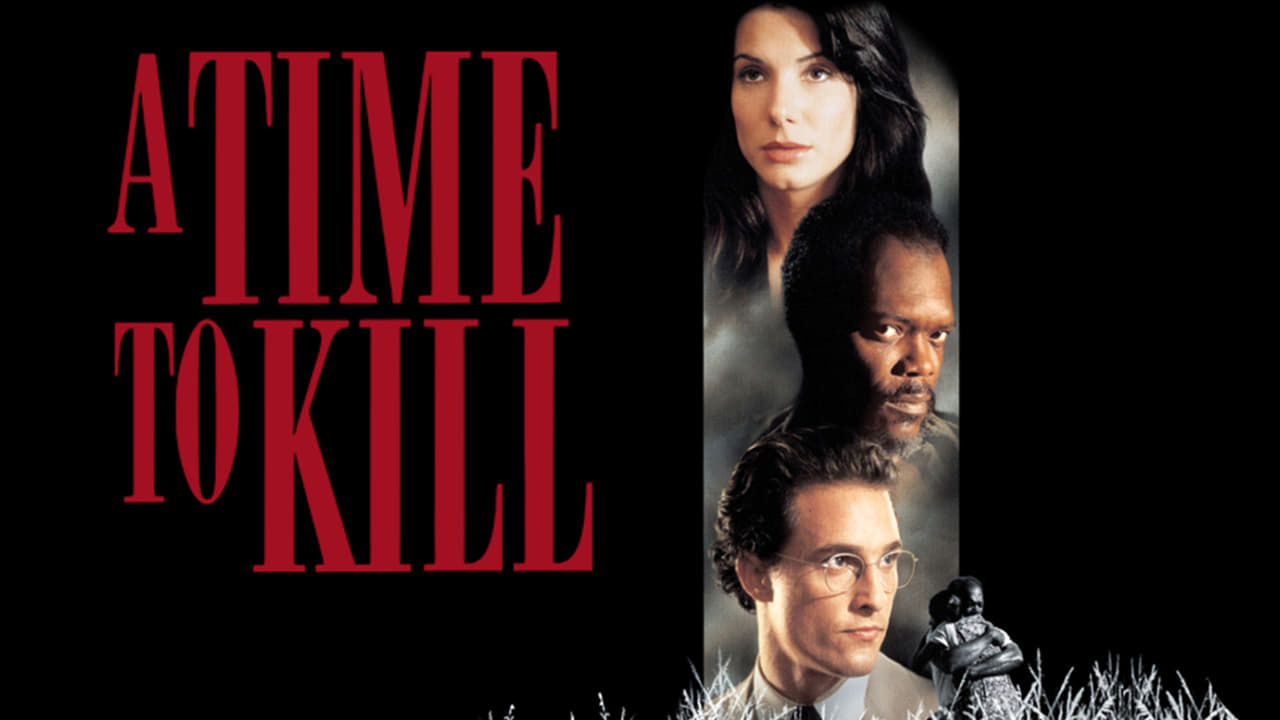
Director: Joel Schumacher
Starring: Samuel L. Jackson, Matthew McConaughey and Sandra Bullock
‘A Captivating Classic’
Not many actors in Hollywood have achieved the appreciation of Samuel L. Jackson. Ever since his rise toward recognition in the 1990’s, Jackson has become a beloved icon. Whether it is cruel gangsters, slave owners or political leaders, Jackson has portrayed many strong characters. Arguably, Jackson’s strength as an actor has always been his strong commitment to his craft. He is one of those rare actors that has always had a talent for stealing the show in supportive roles which have limited screen-time. Even if he isn’t the main focus of a movie, Jackson has always left a strong impression. An actor with a strong commitment toward his craft, Jackson has become an icon in modern-day entertainment. Throughout a long-lasting career, Jackson has made several memorable movies that are absolutely worth talking about without a doubt.
I am a huge fan of Jackson and admire all the films that he has made in his career. However, “A Time to Kill” is truly my favourite. Released in 1996, Joel Schumacher’s movie offered an engrossing portrait of racial injustice causing tragedy. Packed with breathtaking production, engaging storytelling and phenomenal acting, it’s one of the greatest courtroom dramas ever made. At the centre of it all is an extraordinary performance by Samuel L. Jackson, portraying a black man wrongfully accused of committing rape. Ultimately, what makes “A Time to Kill” a masterpiece is its lasting appeal. Unlike most courtroom dramas, it discusses strong themes everyone would relate to. A strong period piece about racial injustice, there are several strong reasons why “A Time to Kill” is a commemorated movie which is worth watching.
Set in 1960’s Mississippi, “A Time to Kill” tells a story of a black man accused of murder with time to kill. Samuel L. Jackson portrays Carl Lee Hailey, a fierce black man with a powerful devotion towards his family. Carl has always shared a strong bond with his daughter Tonya, whom he often seeks to protect from adversity. However, Carl’s life forever changes when he is wrongfully accused of committing murder. In a stressful situation, Carl is accused of enacting the gruesome murder of white men that raped his daughter. Accompanied by the lawyer Jake Brigance (Matthew McConaughey), Carl sets out on a journey to prove innocence in a case which comes with a serious price to pay. Left without any time to kill, Carl questions whether he can prove his innocence in a terrifying case with goals to fulfill.
Joel Schumacher has always been fascinated with themes of injustice. A fantastic filmmaker, Schumacher has always made engaging films about injustice causing disaster. His iconic film “Falling Down” captured the life of an ordinary man lashing out against injustices in societies. With “A Time to Kill”, however, he made his first courtroom drama. It was the filmmaker’s first attempt to capture black men facing wrongful conviction causing tragedy, but he succeeded tremendously. Using stunning cinematography, Schumacher captures a black man embarking on a journey to fight injustice in a city. Inspired with Robert Mulligan’s “To Kill a Mockingbird”, Schumacher expertly uses point of view shots to capture hardship that black men commonly go through. For instance, POV shots enhance wrongful conviction scene. During this intense scene, Carl faces tension when he is accused of murder he hasn’t committed. Using stunning POV shots, Schumacher created a portrait of racism that’s compelling. POV shots are often tricky techniques. As Quentin Tarantino’s “Pulp Fiction” suggested, POV shots enhance crime movies. Nevertheless, it works tremendously in this film. Using stunning visuals, Schumacher caprices hardships that black man which face racism are enduring.
Another admirable aspect of “A Time to Kill” that deserves appreciation is the production. From a technical perspective, the film is very well-made. Schumacher successfully employs costumes to capture the lives of black men in legal cases facing adversities. Throughout the movie, Carl’s costumes showcase his strong transformations into a prisoner experiencing adversities. For instance, costumes enhance the court hearing scene. During this heartfelt scene, Carl engages in his first ever courtroom hearing. Using strong costumes, Schumacher created a portrait of racism that’s compelling. Furthermore, the musical score is phenomenal. Elliot Goldenthal’s music is key to the success of the film. It gives the film tense atmosphere capturing the heavy burden that lawyers often bear. Through strong production, Schumacher captures the tension that men facing wrongful conviction are facing.
Storytelling is one of the central reasons why “A Time to Kill” is a courtroom drama which is engaging. The film is beautifully written, and effectively uses silence to capture the lives of black men affected by violence. Throughout the film, Schumacher uses silence to convey the hardships that are faced by black men in legal cases of violence. For instance, silence enhances trial verdict scene. During this sad scene, Carl discovers the outcome of his legal case causing tension. Through sequences of silence, Schumacher constructs a portrait of racial injustices that audiences can relate to. Silence is a tricky technique to use in movies. As Quentin Tarantino’s “Django Unchained” suggested, silence enhances westerns about slavery. Martin Scorsese’s “Goodfellas” did prove that silence enhances gangster films. Nevertheless, it works immensely. Through a fantastic screenplay, Schumacher captures black men in legal cases which experience a price to pay.
One appreciates amazing performances.

Samuel L. Jackson delivers one of his finest career performances as Carl. Jackson first earned appreciation for playing gangsters in crime dramas. With “A Time to Kill”, however, Jackson took on his most complex role. It isn’t easy to portray a black man that experiences wrongful conviction causing adversity but he succeeds immensely. This is the actor unlike you have ever seen him before: intense, bold and thoughtful in his most unforgettable role. Jackson has often excelled at playing heroes under pressure, and “A Time to Kill” exhibited his strengths as an actor. With breathtaking expressions, he captures the angst, bravery and resentment of a black man experiencing wrongful conviction. It’s a bold performance from one of the most celebrated actors that’s working today.
While the movie is mainly a stunning showcase for Samuel L. Jackson, the supporting cast is also spectacular and worthy of appreciation. Matthew McConaughey is marvellous, bringing intelligence to a lawyer seeking to find a way to resolve a case with a price to pay. Sandra Bullock is spectacular, capturing the charisma of a female attorney seeking to resolve a legal case causing a dilemma. Lastly, Kevin Spacey deserves appreciation. As a racist lawyer, he brings tension to the film.
Finally, “A Time to Kill” would earn recognition of everyone for capturing lawyers which have time to kill. Unlike most movies about lawyers, it tackles strong themes that everyone would relate to. It discusses strong themes including anxiety, mental health and racism which would resonate with everyone. Viewers don’t need to be familiar with the racial injustices of America to appreciate the movie. It delivers a profound message about racism which would resonate with everyone. Therefore, “A Time to Kill” is one of those rare movies about racism everyone will adore.
Fans of Samuel L. Jackson would absolutely enjoy “A Time to Kill” and so would audiences seeking heartfelt entertainment. A powerful legal drama, it honours an actor with charisma.
Nearly 30 years following the release of a groundbreaking film about righteous lawyers seeking to resolve a perplexing case, it’s a riveting reminder about an actor that has managed to gain a huge fan following for his abilities to portray compelling characters that face obstacles in memorable movies audiences embrace.
5/5 stars

 The Film Buff