
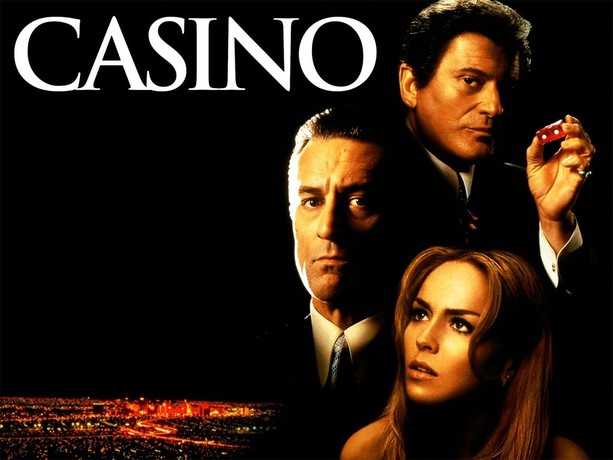
Writer/Director: Martin Scorsese
Starring: Robert De Niro, Joe Pesci and Sharon Stone
‘A Captivating Classic’
Not many directors in Hollywood have created a legacy as powerful as Martin Scorsese. Ever since his rise to fame in the 1970’s, Scorsese has made many memorable movies. Whether it’s cruel gangsters, raging boxers or troubled taxi drivers, Scorsese has created countless memorable characters. Arguably, Scorsese’s finest strength as a filmmaker has often been his strong commitment to his craft. He is one of those rare filmmakers that has excelled at making movies in every genre. Through ability to create characters which prove compelling, Scorsese has built a legacy which is lasting. Despite his age of retirement, Scorsese has never lost his lifelong passion for producing memorable entertainment. Throughout a bold career, Scorsese has made many memorable movies that are definitely worth talking about without a doubt.
I’m a huge fan of Scorsese and actor all the movies he has made in his career. However, “Casino” is certainly my favourite. Released in 1995, Scorsese’s movie offered a beautiful adaptation of a beloved book about casinos. Packed with breathtaking production, strong storytelling and phenomenal acting, it’s one of the best crime movies ever made. At a centre of it all is an outstanding performance from Robert De Niro, who portrays a manager that seeks to manage a casino. Ultimately, what makes “Casino” a crime classic is universal appeal. Unlike most movies about casinos, it tackles strong themes that everyone would relate to. A mesmerizing mobster masterpiece, there are many strong reasons why “Casino” is a commemorated movie that is definitely worth seeing.
Set in 1970’s Las Vegas, “Casino” tells a story of a casino manager that engages in a life of crime causing sorrow. Robert De Niro portrays Ace Rothstein, a prestigious manager that has always excelled at running a casino. Assisted by his enforcer Nicky Santoro (Joe Pesci), Ace has always excelled at managing his renowned casino. However, Ace’s life drastically changes when he discovers the painful consequences of being a casino manager. Problems with his drug addicted wife Ginger (Sharon Stone), Ace discovers the setbacks of managing a casino that’s well-known. As all the odds are stacked against his favour, Ace questions whether it is possible to manage a business which falls in grave danger. Discovering the harsh reality of Las Vegas, Ace questions his dedication to a business that’s dangerous. Facing sorrow, Ace wonders if it’s possible for him to run a strong casino.
Martin Scorsese is fascinated with the themes of crime. A fantastic filmmaker, Scorsese has often made engaging movies about gangsters in danger. His iconic film “Goodfellas” offered a powerful portrait of gangsters which endure dilemmas. With “Casino”, however, Scorsese made his first casino film. It was the director’s first attempt to capture the hardship of casino managers facing catastrophe but he pulled it off effectively. Using stunning cinematography, Scorsese captures a casino manager which seeks to manage a competitive company in a state of catastrophe. Scorsese expertly uses montages to capture a casino manager which seeks to manage a competitive firm causing catastrophe. For instance, montages elevate the casino opening scene. During this intense scene, Ace introduces audiences towards his life as a casino manager keeping a close eye on gambling. Through captivating montages, Scorsese creates a portrait of casinos that’s compelling. Montages are tricky techniques to use in movies. As “Raging Bull” demonstrated, montages enhance commemorated classic films about boxing. Nevertheless, it works immensely in this film. Through stunning visuals, Scorsese captures tensions commemorated casinos are facing.
Another admirable aspect of “Casino” which merits appreciation is the production. From a technical perspective, the movie is extremely well made. Scorsese expertly uses production design to capture casinos that face a decline. Scorsese’s decisions to shoot the movie in a real-life casino is risky but it works immensely. Throughout the movie, the casino is a critical setting that captures the tensions managers are enduring. For instance, the casino setting enhances the angry customer scene. During this memorable scene, Ace seeks to break up a tense fight in his casino involving an angry customer. Through a real-life setting, Scorsese created a portrait of casinos that’s compelling. Moreover, the musical score is marvellous. Roy Hawkins’ music is key towards the success of the movie. It gives the film a tense atmosphere capturing the painful burden which gangsters bear. Through captivating production-design, Scorsese captures casinos that experience a decline.
Storytelling is one of the reasons why “Casino” is movie about casinos that’s compelling. The film is beautifully written, and effectively uses voice-over narration to capture lives of casino managers facing tension. Scorsese’s strength as a screenwriter is his ability to demonstrate tension that casino managers are experiencing by narration. For instance, narration enhances the opening scene. During this intense scene, Ace introduces audiences towards his life as a casino manager through insightful narration. Through narration, Scorsese created a casino manager which audiences can easily relate to. Voice-over narration is a complex technique to use in movies. As “The Wolf of Wall Street” did prove clearly, narration enhances commemorated business films about Wall Street. Nevertheless, it works immensely in this movie. Through a powerful screenplay, Scorsese captures commemorated casino managers facing a price to pay.
One appreciates amazing performances.
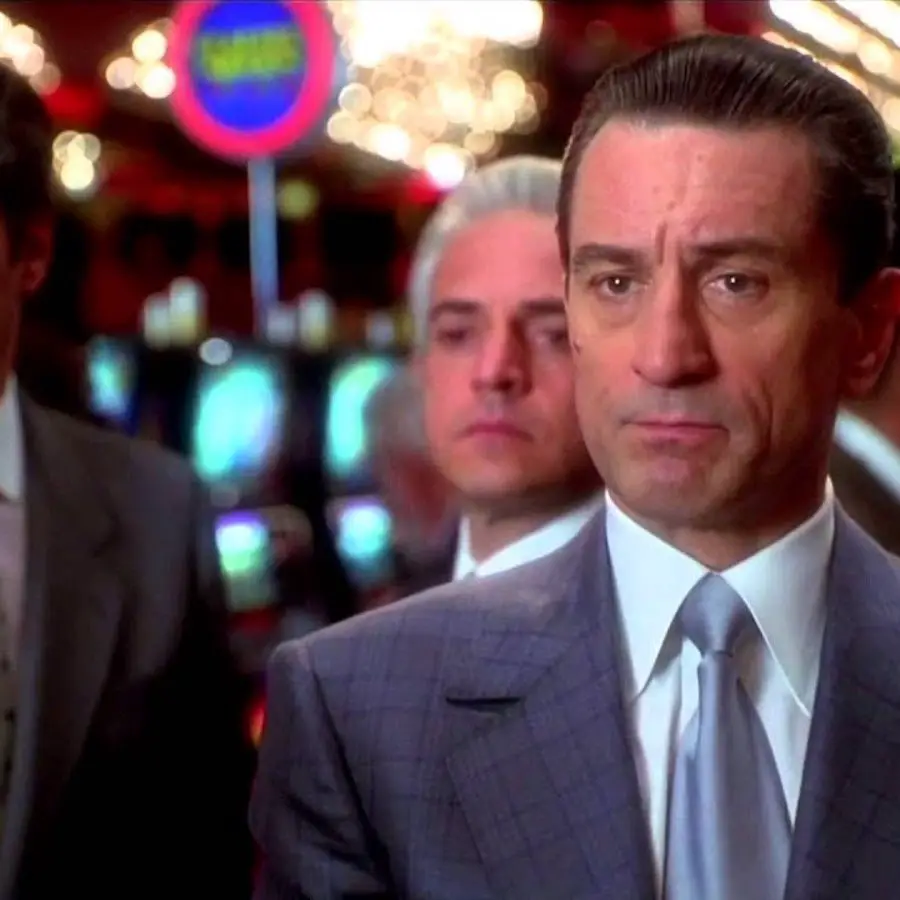
Robert De Niro delivers one of his best career performances as Ace Rothstein. De Niro first earned appreciation for troubled taxi drivers in crime dramas. With “Casino”, however, De Niro took on his most complex role. It isn’t simple to portray a casino manager facing catastrophe, but he succeeded immensely. This is the actor unlike you have ever seen him before: intense, charismatic and emotional in his most iconic role. De Niro has often excelled at portraying emotional heroes under intense pressure, and “Casino” showcased his strength as an actor. With riveting expressions, he captures angst, grief and determination of a casino manager facing tensions. It’s a powerful performance by one of the most commemorated actors which is working today.
While the movie is mainly a stunning showcase for De Niro, the supporting cast is also terrific and deserves praise. Joe Pesci is phenomenal, capturing the short temper of a gangster that engages in a life of crime causing adversities. Sharon Stone is spectacular, capturing intense conflicts endured by a woman that feels alone in love with a casino leader that’s well known. Lastly, Don Rickles merits appreciation. As an authoritative gangster, he brings strong comic relief to the movie.
Finally, “Casino” would earn the appreciation of everyone for capturing casinos which face sorrow. Unlike most films about casinos, the movie tackles strong themes which everyone would relate to. It discusses strong themes of identity, mental health and corruption which would resonate with everyone. Viewers don’t need to be familiar with the book to appreciate it. It delivers a strong message about danger of crime which would resonate with everyone. Therefore, “Casino” is one of those rare films about casinos which everyone would definitely adore.
Fans of Martin Scorsese would definitely enjoy “Casino” and so would movie-goers seeking exhilarating entertainment. A captivating crime classic, it honours a director that has created a legacy that’s iconic.
Nearly 30 years following the release of a captivating crime film about casino managers that face dangerous obstacles in Las Vegas, it’s a riveting reminder about a commemorated filmmaker with a courageous style that has manufactured unforgettable movies throughout his illustrious career which audiences consider precious.
5/5 stars

 The Film Buff