
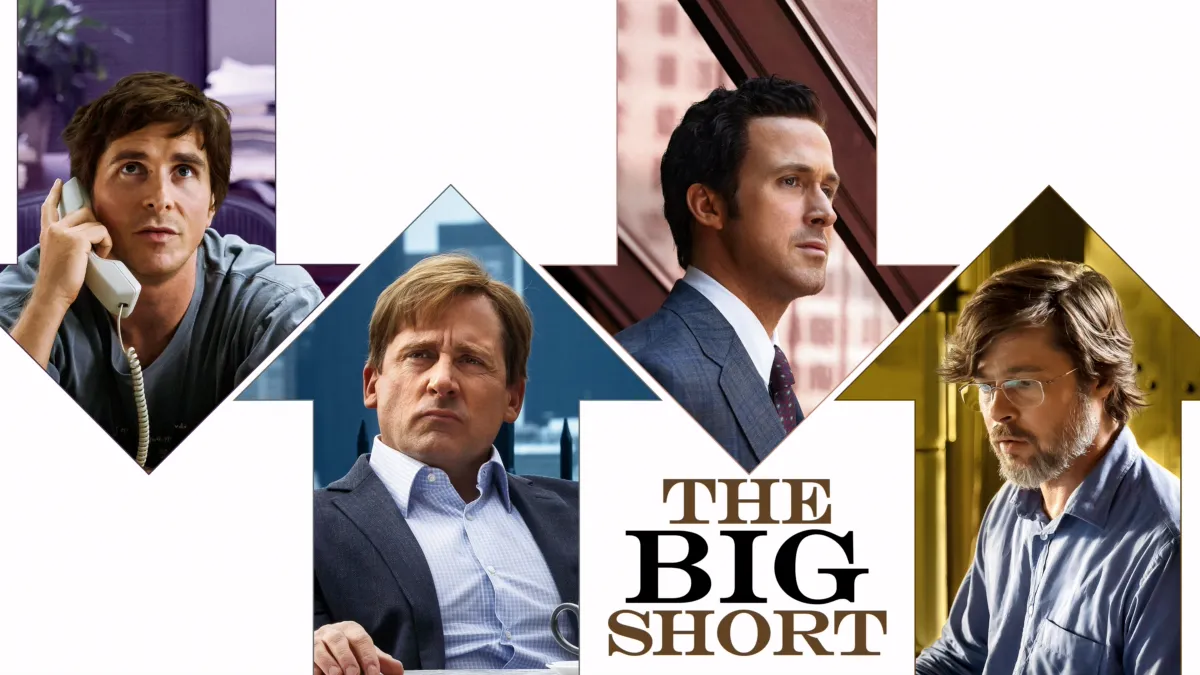
Writer/Director: Adam McKay
Starring: Steve Carell, Ryan Gosling and Brad Pitt
‘A Captivating Satire’
Not many actors make movies that excel like Steve Carell. Ever since his rise to stardom in the 1990’s, Carell has become a celebrated comedic icon. Whether it’s political leaders, frustrated fathers or wrestling trainers, Carell has portrayed many fascinating characters. Arguably, Carell’s strength as an actor is his abilities to excel in every genre. Although he’s best known for making comedies, Carell has proven he can thrive in dramatic films as well. Through his versatility, Carell has become an iconic actor that audiences value. He’s one of those rare actors that has always poured his heart and soul into every single role. Carell has never been afraid of taking risks in his career by portraying characters which aren’t likeable. Shining a bright light in darkness, Carell has become a beloved icon in the entertainment business. An actor whose movies audiences cherish. Carell has become an icon that has proven he can accomplish. Despite his role in “The Office” making him a comedic star, the actor has proven he can excel with practically every genre. Throughout an illustrious career, Carell has produced meany unforgettable movies which are worth talking about without a single doubt.
I’m a huge fan of Carell and adore all the films he has made in his career. However, “The Big Short” is my favourite. Ever since its release in 2015, Adam McKay’s movie has stood the test of time as a classic. With the greatest movie of his career, McKay uses inventive techniques to capture a financial crisis that caused despair. Packed with breathtaking set design, engaging storytelling and phenomenal acting, it’s one of the best movies ever made about the financial crisis. At the centre if it all is an extraordinary performance by Steve Carell, who embodies a financial investor that witnessed a devastating crash causing tragedy. Ultimately, what makes “The Big Short” a masterpiece is its universal appeal. Unlike most movies about the financial crisis, it tackles strong themes which everyone will relate to. It delivers a meaningful message about the importance of forecasting financial trends that would resonate with everyone. An awe-inspiring masterpiece about a frightening financial crisis, there are many strong reasons why “The Big Short” is a movie which is worth seeing.
Set in 2008, “The Big Short” tells the true story of the men which predicted the financial crisis. Steve Carell portrays Mark Baum, a dedicated financial investor that has always had aptitude for predicting financial trends. Baum has never been wrong in his predictions of the economy which are always on point. However, Baum’s life drastically changes when he becomes the victim of a financial crisis that causes disaster. Assisted by his fellow investor Jared Vennett (Christian Bale), Baum seeks to discover the reasons for a financial crisis causing tragedy. Faced with a dilemma, Baum questions if it’s possible to move on from a financial crisis that causes trauma. As all the odds are stacked against his favour, Baum questions whether it’s possible to recover from a painful financial disaster. With the economy left in an uncertain situation, Baum begins to question whether it is possible to move on from a financial crisis causing tension.
Adam McKay is a newcomer to the themes of financial crisis. Before he had made “The Big Short”, McKay had never made a movie about the financial crisis before. It was the director’s first attempt to capture factors which caused the financial crisis but he succeeded. Through spellbinding cinematography, McKay captures an investor embarking on a journey to confront a financial crisis tragedy. Visually, the movie is a stunning feast for the eyes. McKay expertly uses handheld camerawork to capture tension faced by investors confronting financial crisis. Throughout the movie, McKay effectively uses shaky camerawork to capture the tensions of financial investors which experience a crisis. For instance, handheld camerawork elevates the phone call scene. During this tense scene, Mark has an intense argument with his wife on the financial crisis. One appreciates handheld camerawork capturing grim tensions financial investors are facing. Handheld camerawork is a tricky technique to use in movies. As Paul Greengrass’ “Captain Phillips” demonstrated, handheld camerawork elevates movies about hijackings. Steven Spielberg’s “Jaws” claimed handheld camerawork elevates commemorated horror movies about scary sharks. Nevertheless, it works well in this film. Through engaging visuals, Adam McKay captures a financial crisis which was frightening.
Another admirable aspect of “The Big Short” that merits appreciation is the production. From a technical perspective, the movie is extremely well made. McKay expertly uses production-design of offices in Wall Street to capture a financial crisis causing lives to decline. McKay’s decisions to shoot the film in real-life offices in Wall Street is risky but works immensely. Inspired by Martin Scorsese’s “The Wolf of Wall Street”, McKay effectively utilizes real-life locations in Wall Street to capture a financial tragedy. For instance, the real-life offices elevate the presentation scene. During this unforgettable scene, Jared delivers an engaging presentation forewarning financial crisis to a group of investors. Furthermore, the musical score is magnificent. Nicholas Britell’s music is integral towards the success of the film a tense atmosphere capturing the heavy burden that financial investors bear. Through strong production-design, McKay captures the investors that faced a financial crisis causing a decline.
Storytelling is one of the reasons why “The Big Short” is a classic film about a financial crisis that’s engaging. The film is beautifully written, and effectively uses breaking the fourth wall to capture investors reacting to a financial crisis. McKay’s screenwriting strength is his ability to capture the lives of investors reacting towards a financial crisis through breaking the fourth wall. Throughout the movie, the characters stop and speak directly towards audiences about the financial crisis. For instance, fourth wall breaks elevate the explanation scene. During this unforgettable scene, Margot Robbie appears in a surprise appearance to explain the mechanics of the financial crisis speaking directly to the camera. Breaking the fourth wall is a tricky technique to employ in movies. Martin Scorsese’s “The Wolf of Wall Street” suggested, breaking the fourth wall elevates renowned movies about Wall Street stockbrokers. Nevertheless, it works really well Im this movie. Through engaging storytelling, Edward Berber captures the lives of investors facing a price to pay.
One appreciates astonishing performances.

Steve Carell delivers one of his best career performances as Mark Baum. Carell first achieved appreciation for playing comical characters in comedies. With “The Big Short”, however, the actor took on his most complex role. It isn’t easy to portray an investor that becomes the victim of a financial crisis that causes tragedy. This is the actor unlike you have ever seen him before: intense, serious and emotional in his most memorable role. It’s a role that gave the actor a chance to show emotional range he hadn’t shown in his career before. With remarkable expressions, Carell captures the angst, determination and grief of an investor that witnessed a financial disaster tragedy. It’s a phenomenal performance from one of the most commemorated actors in the industry today.
While the movie is mainly a stunning showcase for Steve Carell, the supporting cast is equally amazing and worthy of appreciation. Christian Bale is captivating, capturing the dedication of an investor that discovers evidence of financial crisis with detail in an economy that’s doomed to fail. Ryan Gosling is astonishing, bringing a sharp sense of humour to an investor seeking to educate investors regarding financial crisis which is frightening. Lastly, Brad Pitt deserves appreciation. As an intelligent market analyst, he brings a commanding sense of authority to the movie.
Finally, “The Big Short” will earn appreciation of everyone for demonstrating a big economic downfall. Unlike most films about the financial crisis, it tackles strong themes which everyone will relate to. It discusses bold themes such as identity, friendship and trauma that resonates with everyone. Viewers aren’t required to be educated about the technical concepts of the financial crisis to enjoy it. It delivers a meaningful message about commemorated crisis that would resonate with everyone. Therefore, “The Big Short” is one of those rare movies on the financial crisis that tackles commemorated themes everyone would relate to.
Fans of Steve Carell will definitely appreciate “The Big Short” and so would audiences that seek educational entertainment. A captivating classic about a frightening crisis, it celebrates an actor that has built a legacy that is proven iconic.
Nearly 20 years following a frightening financial crisis that came with long-lasting consequences causing the economy to face a decline in revenues leaving the world of finance grieving, it’s a riveting reminder of an actor that has built a lasting legacy earning a huge fan following for his abilities to portray larger-than-life characters which are compelling in engaging movies which are definitely without a doubt worth celebrating.
5/5 stars

 The Film Buff