

Writer/Director: Mike Figgis
Starring: Nicholas Cage, Elisabeth Shue and Julian Sands
‘A Captivating Classic’
Few actors in Hollywood have the abilities to engage audiences like Nicolas Cage. Ever since his rise to recognition during the 1980’s, Cage has become one of the greatest movie-stars in the film industry. Cage is one of those actors that has always poured his heart and soul into every role. Whether it’s frustrated writers, hard drinking loners or psychopathic serial killers, the movie-star has depicted many memorable characters. The actor has never been afraid to go over-the-top in his largert-than-life performances. While Cage has earned. a cult following, his tendencies to adopt an over-the-top acting style have attracted criticism. Simply put, his movies aren’t intended for everyone. Nevertheless, this hasn’t stopped the commemorated actor from gaining success in the film industry. Throughout his long-lasting career, Cage has appeared in several memorable movies which are definitely without a single doubt worth watching.
I’m a big fan of Cage and adore all the commemorated movies he has made in his career. However, “Leaving Las Vegas” is my favourite. Released in 1995, Mike Figgis’ movie painted a strong portrait of alcohol addiction. Packed with strong visuals, sharp storytelling and phenomenal acting, it’s one of the best movies ever made about alcoholism. At the centre of it all is an extraordinary performance by Nicolas Cage, who embodies an alcohol addict embarking on a downward spiral. Ultimately, the fim delivers a powerful message about the dangers of addiction that would strike chords with everyone. A mesmerizing masterpiece about the dangers of drinking, there are many strong reasons why “Leaving Las Vegas” is definitely worth watching.
Set in Las Vegas, “Leaving Las Vegas” tells a story of a reckless screenwriter which suffers from severe addiction to drinking. Nicholas Cage embodies Ben Sanderson, an alcoholic screenwriter that loves to engage in heavy drinking which leads to damage. After he loses everything including his career due towards his drinking, Ben’s health begins to gradually start declining. However, Ben’s life forever changes when he forms a strong friendship with the prostitute Sera (Elisabeth Shue). Sera is a compassionate sex worker that shows concern for Ben’s drinking habits. It isn’t long before the pair of unlikely souls forma a romance. As Ben’s life begins to spiral out of control, he questions whether he can find enjoyment in drinking without a goal.
Mike Figgis is a newcomer towards stories of alcohol addicts. Before he directed “Leaving Las Vegas”, Figgis has never made a film about alcohol addiction. It was the filmmaker’s first attempt to capture the lives of alcoholic writers, but he succeeded. Through powerful cinematography, Figgis captures the life of an alcoholic screenwriter embarking on a journey to discover his identity.Visually, the movie is a feast for the eyes. Figgis expertly uses handheld camera to capture the lives of alcohol addicts facing a dilemma. The movie is shot using dizzying camerawork emulating the experience of being high on drugs. Throughout the movie, Figgus expertly uses handheld cameras to capture hardships alcohol addicts go through. Handheld camera is a tricky technique to use in movies. As Osgood Perkins’ “Longlegs” demonstrated, handheld camerawork elevates thrillers capturing the lives of serial killers. Nevertheless, it works extremely well in this movie. Using breathtaking visuals, Figgis captures the dangers of excessive drinking.
Another commendable aspect of “Leaving Las Vegas” worth discussing is the production-design. From a technical perspective, the movie is really well-made. Figgis effectively employs real-life locations across Las Vegas to capture the life of an alcohol addict on a downward spiral. For instance, the Las Vegas locations elevate the casino scene. During this memorable screen, Ben has a nervous breakdown in front of everyone after drinking in a casino. One admires the backdrop of Las Vegas casinos capturing hardships drug addicts got rhough. Through these authentic locations, Figgis captures the consequences of alcohol addiction. Moreover, the musical score is magnificent. Anthony Marinelli’s music gives the movie an engaging atmosphere. Through phenomenal production-design, Figgis captures struggles of alcohol addicts facing a decline.
Storytelling is one of the main reasons why “Leaving Las Vegas” is a classic which is captivating. The movie is beautifully written, and effectively uses sequences of silence to capture the bonds between a prostitute and alcoholic man. Figgis’ screenwriting strength is capturing a negative impact of alcoholism on romantic relationships by silence. Throughout the movie, Ben and Sera form a strong bond together by spending time with one another in silence. For instance, silences enhance the scene in which Ben and Sera spend time with each other in an apartment. The silence is crucial in showcasing a strong bond between the two lovers. Through these ingenious silences, Figgis builds a compelling character that audiences can easily relate to. Silence is a tough technique to use in most movies. As Michael Sarnoski’s “Pig” suggested clearly, scenes of silence enhance cooking dramas. Nevertheless, it works immensely in this movie. Through an extraordinary screenplay, Figgis captures the frightening hardships that alcoholic men experience today.
One admires astonishing performances.
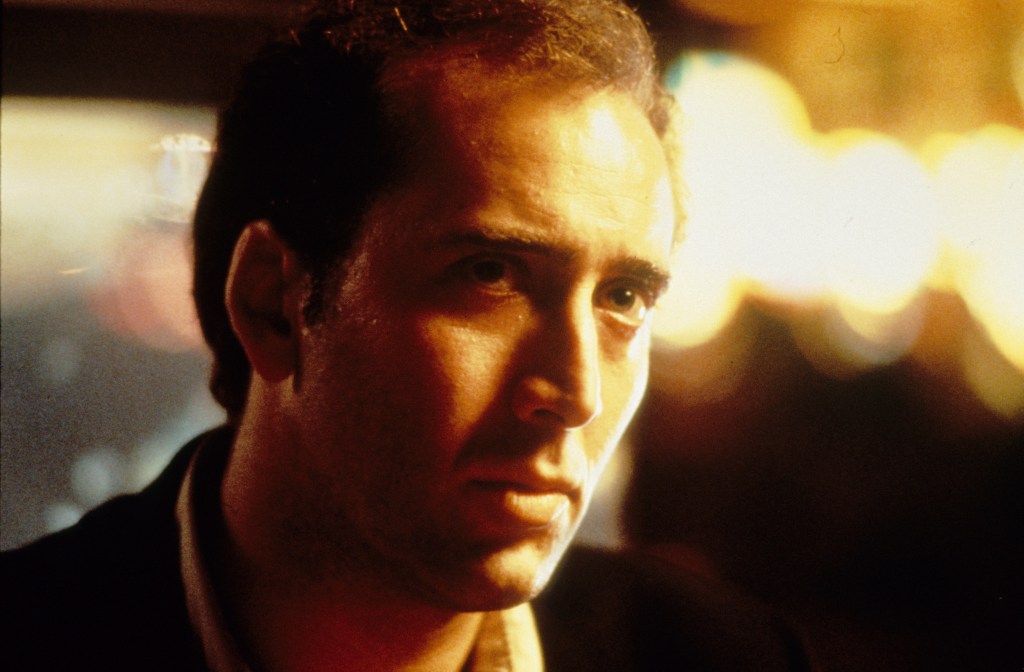
Nicholas Cage delivers one of his finest career performances as Ben. Cage earned praise for playing men raised in Arizona. With “Leaving Las Vegas”, however, he depicted his first alcoholic role. It isn’t easy to embody the personality of an alcoholic screenwriter embarking on a path of self-destruction, but Cage succeeded tremendously. It’s an emotionally demanding role that gave the actor a chance to showcase his strong emotional range that he hadn’t shown in most of his films before. With strong expressions, Cage embodies the anger, fears and reckless nature of an alcohol addict whose life experiences doomsday disaster. It’s a phenomenal performance that launched the successful career of one of the world’s greatest movie-stars today.
Elisabeth Shue is excellent as a prostitute that becomes concerned for health of an alcoholic man she has grown to value. While Cage gets the showier role, Shue is equally excellent as a woman that keeps her emotions under control. As Sera, Shue excels at using body language to capture the hardships that prostitutes go through. Whether she’s silently bonding with Ben or struggling earning a living through abuse, Shue effectively uses body language to capture the downtrodden experience of a prostitute. It’s a phenomenal performance from one of the world’s most underrated actresses today.
Finally, “Leaving Las Vegas” would earn the appreciation of everyone for depicting dangers of drinking. Unlike most movies capturing grim realities of alcoholism, it’s a film everyone will relate to. The movie tackles universal themes including alcoholism, identity and rape which would resonate with everyone. Viewers aren’t required to be fans of Nicholas Cage to appreciate it. The film delivers a strong message resonating with everyone that faces damage of drinking at an early age. Hence, “Leaving Las Vegas” is one of those rare movies which everyone will adore.
Fans of Nicholas Cage would definitely enjoy “Leaving Las Vegas” and so will movie-goers seeking meaningful entertainment. A dazzling classic about drinking, it celebrates an actor whose timeless movies about alcohol addicts are worth appreciating.
Nearly 30 years following the release of a classic film capturing consequences that alcohol addicts planning on leaving Las Vegas are facing, it’s an engrossing reminder of an actor that hasn’t lost his abilities to make entertaining movies through portraying compelling characters facing frightening hardships that everyone can relate to whose timeless movies about alcohol addiction are definitely worth celebrating.
5/5 stars

 The Film Buff
You must be logged in to post a comment.