
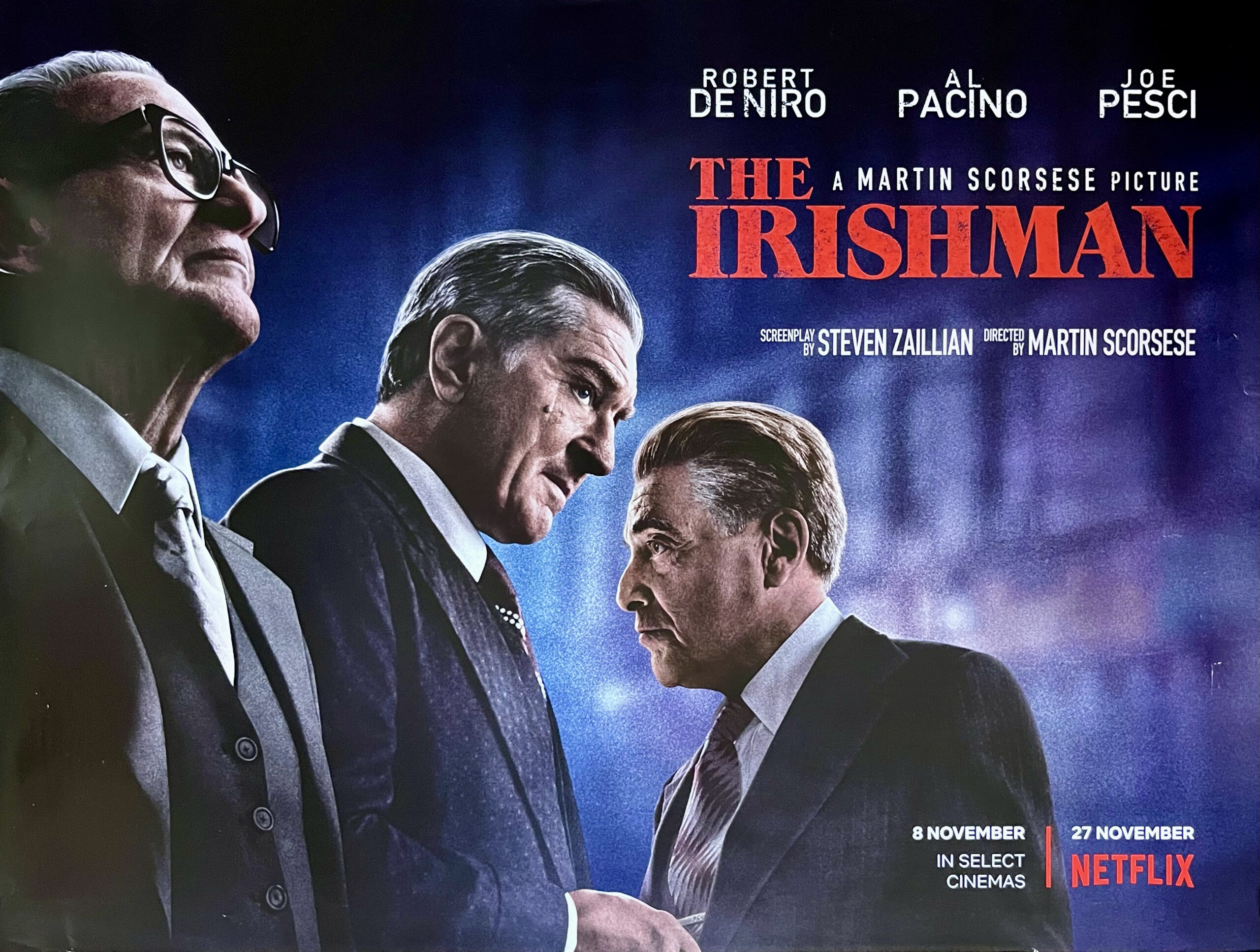
Director: Martin Scorsese
Starring: Robert De Niro, Al Pacino and Joe Pesci
‘A Magnificent Masterpiece’
Not many directors in Hollywood have created a legacy as legendary as Martin Scorsese. Ever since his rise to stardom in the 1970’s, Scorsese has made timeless movies. Scorsese has gained a massive fan following by his ability to tell compelling crime stories. Whether its stories of troubled taxi drivers, boxers with raging bull tempers or guilt-ridden gangsters, Scorsese’s movies often focus on compelling characters. Scorsese’s greatest strength as a filmmaker has always been his powerful ability to draw from his own personal experiences to create compelling movies. Despite reaching the age of retirement, the filmmaker has never lost his passionate commitment to making engaging entertainment. A living legend, Scorsese has constructed an impressive career through producing extraordinary movies that are worth watching.
I’m a huge fan of Martin Scorsese and adore the memorable movies that he has made throughout his illustrious career. However, “The Irishman” may be his most personal film. Released in 2019, Scorsese’s movie painted a powerful portrait of obstacles that aging gangsters are facing. In the most mature film of his career, Scorsese captured how aging can become a painful burden to bear. Boasting exquisite production-design, thought-provoking storytelling and phenomenal performances, it’s a magnificent mobster masterpiece. At the centre of it all are a trio of incredible performances from Robert De Niro, Al Pacino and Joe Pesci who embody larger-than-life gangsters facing consequences of aging. Ultimately, the film delivers a meaningful message about guilt that would resonate with everyone. A mesmerizing mobster masterpiece, it celebrates a filmmaker that hasn’t lost abilities to make classic movies that are enduring.
Set in 1950’s Philadelphia, “The Irishman” recounts the true story of a mobster that committed crimes for the mafia causing trauma. Robert De Niro embodies Frank Sheeran, a dedicated hitman that works for the Italian-American mafia. Frank is a devoted hitman that learned to separate emotions from crimes he has committed. However, Frank’s life changes when he’s assigned tasks of assassinating the union delegate leader Jimmy Hoffa (Al Pacino). As Frank gets to know Hoffa on a personal level, he forms a powerful friendship with a comrade he regards special. Facing a dilemma, Frank struggles to face the fact that he has to assassinate Hoffa. Under pressure, Hoffa questions whether he will be able to fulfill responsibilities being a gangster.
Martin Scorsese has always been fascinated with stories of gangsters. Throughout his long-lasting career, Scorsese has often explored feelings of guilt causing gangsters to face despair. With “The Irishman”, however, Scorsese crafted his first film about aging mobsters. It was the filmmaker’s first attempt to capture barriers of aging impacting gangsters, but he succeeded. Through captivating cinematography, Scorsese captures a gangster embarking on a journey to commit crimes in the 1950’s. Visually, the film is a feast for the eyes as stunning as crimes that Frank Sheeran seeks to organize. Scorsese effectively uses tracking shots to draw viewers into the life of a gangster committing crimes causing tragedy. Tracking shots elevate the opening scene. During this scene, viewers are introduced to Frank Sheeran in a retirement home where he recounts his tragic life story. It’s an unforgettable opening scene that establishes the dark tone of the movie. The tracking shot does an effective job of capturing an aging gangster whose mental health is declining. Through this ingenious technique, Scorsese captures hardships that aging gangsters go through. Using breathtaking visuals, Scorsese creates a gangster classic that’s engaging.
Another admirable aspect of “The Irishman” worth discussing is the production. From a technical perspective, it may be the most impressive gangster movie you’ll ever see. Scorsese effectively uses de-aging technology capturing gangsters facing consequences of aging. De-aging technology elevates the final warning scene. During this unforgettable scene, Frank gives Hoffa a final warning that he is being targeted by gangsters that are terrifying. One admires de-aging effects bringing aging gangsters to life on the big-screen. Through this ingenious technique, Scorsese captures barriers posed by aging impacting lives of gangsters. De-aging is a tricky technique to use in movies. When used excessively, it can often become a distraction taking viewers out of a movie. James Mangold’s “Indiana Jones and the Dial of Destiny” suggested de-aging elevates classic adventure movies. Nevertheless, it works tremendously. Moreover, the musical score is magnificent. Robbie Robertson’s music captures gangsters facing consequences that are tragic. Through awe-inspiring production, Scorsese captures gangsters facing health deterioration.
Storytelling is one of the key reasons why “The Irishman’ is a gangster classic that’s compelling. Like all of Scorsese’s movies, it’s simply a beautiful story that’s told extremely well. The film is beautifully written, and effectively captures repercussions of aging by voice-over narration. Scorsese’s screenwriting strength is his ability to create compelling gangster characters through voice-over narration. Evoking his iconic film “Goodfellas”, Scorsese expertly uses voice-over narration to capture a gangster reflecting on his life of crime causing repercussions. Like Henry Hill’s reflections on the lifestyles of gangsters, Frank reflects on his job as a hitman that caused disaster. Throughout the movie, an aging Frank sitting in a retirement home reflects on his painful past as a gangster. Whether it’s a bloody assassination or defending his daughter from a shopkeeper, Frank recounts incidences that shaped his life. Through this ingenious technique, Scorsese creates a compelling gangster that viewers can relate to. Voice-over narration is a complicated technique. Frank Darabont’s “The Shawshank Redemption” suggested narration elevates prison dramas. David Fincher’s “Fight Club” proved narration elevates psychological thrillers. Nevertheless, it succeeds. Through a spectacular screenplay, Scorsese captures lifestyles of gangsters with a price to pay.
One appreciates astonishing performances. The film is a stunning showcase for three legendary actors in the industry.
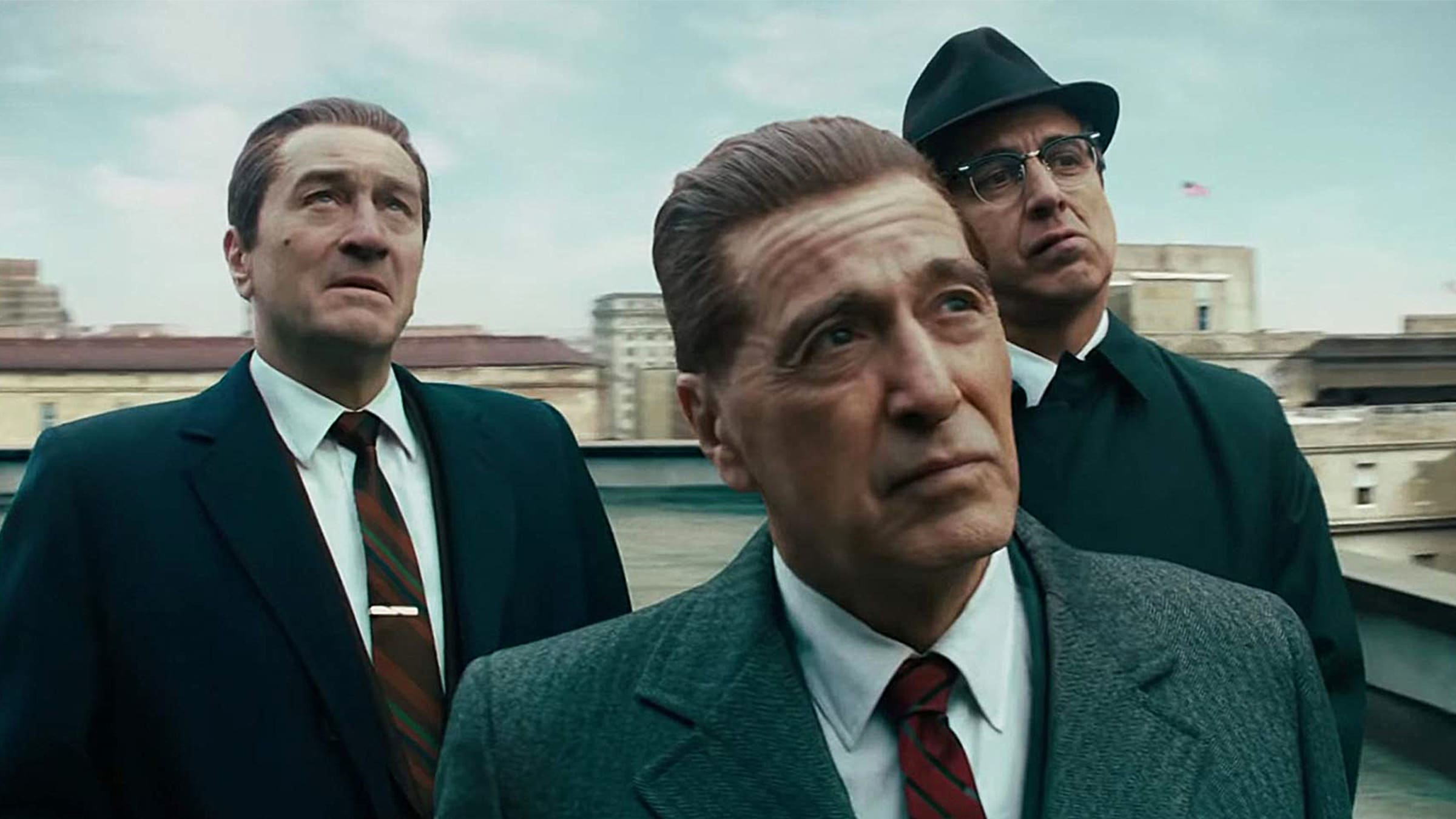
Robert De Niro delivers one of his greatest performances as Frank Sheeran. De Niro achieved appreciation for playing gangsters. With “The Irishman”, however, he took on his most demanding role. It’s challenging to portray an aging gangster facing consequences, but De Niro succeeds. With mesmerizing expressions, he captures angst, guilt and trauma of a gangster that isn’t proud of his decisions. De Niro has spent a large part of his career playing gangsters, but this is his most vulnerable performance to date. It’s a phenomenal performance from one of the world’s greatest movie-stars that hasn’t lost abilities to captivate.
Al Pacino is phenomenal as a union leader with a tendency to throw tantrums that gives people dreams to follow. While De Niro gets the showier role, Pacino is excellent at portraying a political figure driven to achieve a goal. As Jimmy Hoffa, Pacino makes the most out of a role that allows him to showcase his natural charisma. Whether he’s yelling at employees in anger for failing to meet targets or silently bonding with Frank eating ice cream, Pacino uses his voice to create a character that’s fascinating. Despite his age, he proves that he hasn’t lost abilities to engage. It’s a powerful performance from a legendary movie-star.
The last, most notable standout in the cast is Joe Pesci. As a gangster leader, he brings a sense of authority to the movie.
Finally, “The Irishman” will earn everyone’s appreciation for its authentic depiction of guilt experienced by gangsters seeking direction. Unlike most movies about mobsters which are often cold, the film tackles universal themes everyone would relate to. The film discusses universal themes including identity, family and guilt which would resonate with everyone. Viewers aren’t required to be fans of the gangster genre to appreciate it. It delivers a universal message that would engage everyone that has experienced feelings of guilt at an early age. Therefore, “The Irishman” is one of those rare mobster movies everyone would adore.
Fans of Martin Scorsese will definitely appreciate “The Irishman” and so will movie-goers seeking meaningful entertainment. A mesmerizing mobster masterpiece, it captures the enduring legacy of a filmmaker worth celebrating.
Nearly 30 years after Martin Scorsese first began making memorable movies about goodfellas gangsters committing gruesome crimes putting lives in danger, it’s a soul-stirring tribute towards a legendary filmmaker that earned a huge fan following for his abilities to tell compelling stories about men engaging in despicable criminal behaviour with severe consequences of guilt whose timeless movies about sympathetic hitmen that haven’t lost their abilities to leave audiences captivated fans will forever treasure.
5/5 stars

 The Film Buff