
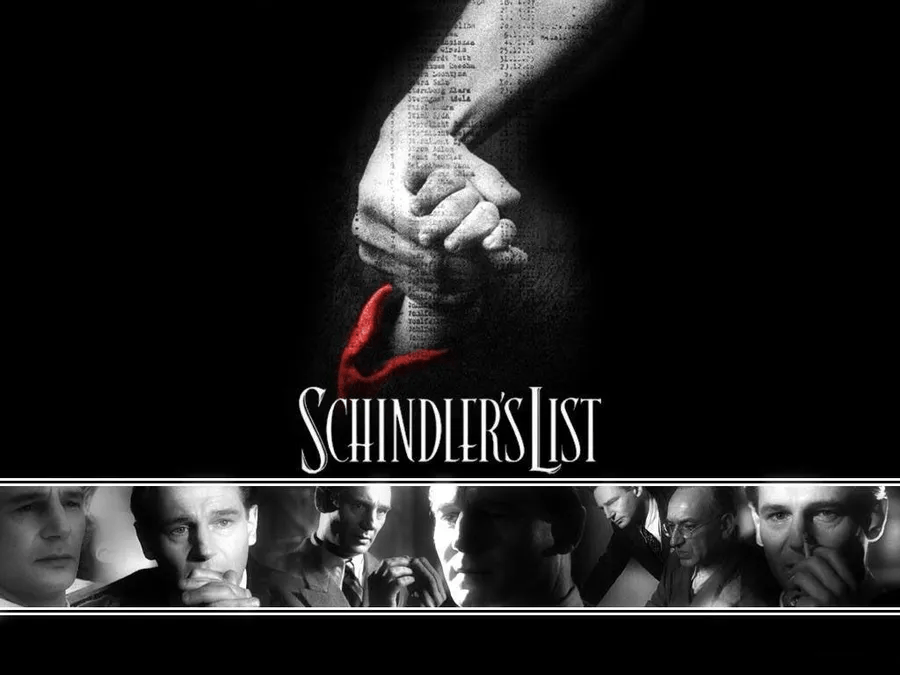
Director: Steven Spielberg
Starring: Liam Neeson, Ralph Fiennes and Sir Ben Kingsley
‘A Magnificent Masterpiece’
The Holocaust is a sensitive subject that’s rarely depicted in movies with respect. No matter how hard it has often tried, Hollywood has commonly failed to depict a mass genocide in which people died. It’s proven to be easier said than done for filmmakers to capture a genocide that involved mass destruction. Depicting the Holocaust in movies often requires filmmakers to strike a fine balance between entertainment and historical accuracy. Very few movies if any have managed to pull off this tricky balance effectively.
I’ve seen a long list of movies that failed miserably at depicting the genocide in history. In this regard, Steven Spielberg’s “Schindler’s List” is an exception. Released in 1993, Spielberg’s Oscar-winning film did an extraordinary job of depicting the mass genocide in history. Spielberg’s masterpiece has stood the test of time as the greatest film ever made about the Holocaust. Boasting exquisite production-design, sharp storytelling and phenomenal performances, it’s one of those rare movies that works on every single level. Ultimately, what sets it apart from other movies about the genocide is its powerful message. It delivers a powerful message of hope that is rare to find in depressing movies made about a dark genocide.
Set in Nazi Germany, “Schindler’s List” tells the true story of a businessman that created a list to rescue Jews from atrocity. Liam Neeson portrays Oskar Schindler, a greedy German businessmen seeking to profit from the war. However, Schindler’s perception of the war changes when he witnesses atrocities committed against Jews. Ashamed of his country, Schindler decides to create a list in order to save Jews from the worst mass genocide in history. As Schindler witnesses atrocities against Jews, he questions his worldviews.
Steven Spielberg was in a sense the perfect director for this film. Before making “Schindler’s List”, Spielberg had never made a movie about the Holocaust before. He was known mostly for his action-packed blockbusters such as “Indiana Jones”. However, Spielberg had a personal connection to the genocide which made him suitable to direct a film about the Holocaust. Spielberg was born into a Jewish family with ties to the Holocaust. It was the filmmaker’s first attempt to capture a mass genocide disaster but he succeeded tremendously. Through captivating cinematography, Spielberg captures a businessmen on a journey to confront mass genocide atrocities. Spielberg’s decisions to shoot the movie in black and white is risky but works tremendously. The black-and-white visuals lend a grim atmosphere to the movie, capturing the harsh reality of mass genocide in history. The black-and-white palette feels appropriate for the dark subject matter. Through stunning cinematography, Spielberg honours memory of a mass genocide in history.
Another extraordinary aspect of “Schindler’s List” that contributes to its success is the production-design. From a technical perspective, the film is extremely well-made. Spielberg’s decisions to shoot the film in real-life concentration camps across Auschwitz pays off tremendously. The real-life camps lend a strong sense of realism and authenticity to the movie. This is clearly evident in the scene where Amon Goeth shoots prisoners from the balcony of his house. It’s a terrifying scene capturing the harsh realities of a genocide in which no Jew was spared. The real-life concentration camp elevates the scene by creating historical accuracy. It makes viewers feel they have been transported back in time to the genocide. Through extraordinary production-design, Spielberg captures a genocide leading the lives of Jews to decline.
As with any Steven Spielberg movie, “Schindler’s List” is beautifully written. Spielberg’s screenwriting strength is his ability to capture the impact of genocide through symbolism. In Hollywood, most movies about the Holocaust rarely address its negative impact on the world. Spielberg did an extraordinary job of depicting the genocide through clever symbolism. Throughout the movie, Spielberg uses the symbol of a girl wearing a red coat to symbolize the devastating nature of the Holocaust. The girl wearing the red coat attire represents a symbol of hope amidst the devastating darkness of the genocide. Through this clever symbolism, Spielberg captures hardships that Jews in mass genocide went through. Symbolism is a tricky technique to use in movies. When used excessively, symbolism can often detract from quality of movies. That being said, it worked tremendously in “Schindler’s List”. Through a spectacular screenplay, Spielberg captures harsh realities of a genocide which came with a painful price to pay.
One admires astonishing performances. “Schindler’s List” wouldn’t be the masterpiece that it is without the stunning acting.

Liam Neeson delivers one of the best performances of his career as Oskar Schindler. Prior to acting in “Schindler’s List”, Neeson was an action movie-star that wasn’t known for his dramatic work. It was the actor’s first foray into a serious drama. It isn’t easy to portray the personality of a businessman that saved Jews from atrocities, but Neeson succeeded. With mesmerizing expressions, he captures the intelligence, determination and perseverance of a businessman seeking to rescue Jews from grave danger. It’s a phenomenal performance that earned Neeson a well-deserved Oscar nomination.
Ralph Fiennes is fantastic in the role of a frightening Nazi commander that instills terror in Jewish prisoners whose lives are in danger. It is not easy to portray a real-life Nazi commander that committed atrocities in history, but Fiennes pulled it off successfully. Whether he’s abusing his weak housekeeper or contemplating which Jews to murder, Fiennes expertly uses his commanding voice to capture the ruthless personality of a Nazi commander. It’s a powerful performance that launched the career of one of the greatest British actors working today.
The last, most unforgettable standout in the cast is Sir Ben Kingsley. As Schindler’s Jewish assistant, he brings heartfelt emotion to the movie.
Finally, “Schindler’s List” will earn everyone’s appreciations for its poignant message about the Holocaust. Unlike most movies made about the Holocaust, it’s one of those rare movies everyone can relate to. It tackles universal themes including discrimination, genocide and trauma which would impact everyone. Viewers aren’t required to have knowledge about the Holocaust to appreciate it. It delivers a universal message that resonates with everyone experiencing trauma at an early age. Therefore, “Schindler’s List” is one of those rare Holocaust movies that will appeal to a wide range of movie-goers.
Fans of historical dramas will definitely appreciate “Schindler’s List” and so will movie-goers seeking heartbreaking entertainment.
Nearly 90 years after a gruesome mass genocide tragedy in history, it’s a soul-stirring tribute to a legendary businessman that created a list to rescue Jews from atrocities whose heroism deserves to be celebrated in movies proving Cinema is a powerful art-form educating audiences about catastrophes that changed the world drastically.
5/5 stars

 The Film Buff
You must be logged in to post a comment.