

Director: Michael Engler
Starring: Maggie Smith, Hugh Bonneville and Jim Carter
‘A Beautiful Adaptation’
Few actresses in Hollywood are as iconic as Maggie Smith. Ever since her rise to stardom during the 1960’s, Smith appeared to be an actress that had a bright future in the film industry. With her larger-than-life presence, charming personality and sharp sense of humour, Smith earned a massive fan following. However, recently Smith’s career came to a sudden closure when she passed away from Cancer. Smith’s death was a massive loss for the film industry. It was not simple to come to terms with the loss of an actress that had become a beloved cinematic icon. Following her devastating passing, Smith left behind a lasting legacy by creating unforgettable movies. Throughout her illustrious career, Maggie Smith made several memorable movies that are definitely without a doubt worth seeing. A one-of-a-kind actress, Smith was a legendary figure that left a lasting legacy behind.
I’m a huge fan of Maggie Smith admire all the movies she made throughout her illustrious career. However, “Downton Abbey” may be my favourite. Released in 2019, Michael Engler’s film offered a beautiful adaptation of an iconic television series. Packed with bold production, sharp storytelling and phenomenal acting, it’s one of the best period adaptations ever made. At the centre of it all is a strong performance from Maggie Smith, who embodies the wealthy countess of a legendary mansion. Ultimately, the the film delivers a strong message about social class which would definitely resonate with everyone. Viewers aren’t required to be fans of the renowned television series to appreciate it. An engaging adaptation of a television series, there are several strong reasons why “Downton Abbey” is definitely worth watching.
Set in the 1920’s, “Downton Abbey” tells the story of a family making preparations for visits from Royal figures. Maggie Smith embodies Violet Crawley, the wealthy countess of the Crawley family. Violet is a woman with a sharp sense of humour that’s concerned about the fate of her wealthy family. Violet seeks to live a life of peaceful retirement. However, her dreams are threatened when the King announces an unexpected visit to Downton Abbey. Faced with a dilemma, Violet is forced to make preparations for a massive meeting with royal figures. As she experiences consequences posed by aging, Violet starts to question whether a meeting with royal figures is any longer worth pursuing. Adopting a negative attitude, Violent questions her associations with a wealthy aristocratic family which she once in the past valued.
Michael Engler has often been fascinated with Downton Abbey. Engler is an excellent British filmmaker that was known for directing many episodes of the famous television show. With “Downton Abbey”, however, he crafted his first adaptation of the beloved TV show. It was the filmmaker’s first attempt to adapt a beloved television series about wealthy aristocrats on the big-screen but he succeeded immensely. Visually, the film is a feast for the eyes. Through stunning cinematography, the filmmaker captures the journey of a wealthy British family. Taking inspiration from the television show, Engler captures the life of a rich aristocratic family through montages. Engler deftly uses montages to capture a wealthy family making preparations for a royal visit. For instance, montages elevate the opening scene. During this strong scene, viewers are introduced for the first time to the traditions of the Crawley family through a montage. Montages are tricky techniques to use in movies. Nevertheless, they work extremely well in this movie. Through breathtaking visuals, Engler captures the commemorated lives of wealthy aristocrats seeking meaning.
Another admirable aspect of “Downton Abbey” is the production. From a technical point-of-view, the film is extremely well-made. The costumes, sets and production are all top-notch, capturing the beauty of the beloved television series. Throughout the movie, the setting of the mansion plays an important role. Whether its gorgeous rooms or elaborate windows, the production of the home captures the life of a wealthy British aristocratic family. For instance, the set design enhances the king’s arrival scene. During this strong scene, the Crawley family welcomes the arrival of a majestic king to their home. One admires the gorgeous production-design that captures families. Furthermore, the musical score is magnificent. John Lunn’s music is integral to the movie’s success. It captures the whimsical atmosphere of a family seeking to prepare for a royal visit. Through phenomenal production-design, Engler captures wealthy families that shine.
Storytelling is one of the primary reasons why “Downton Abbey” is a movie which is definitely worthy watching. The film is beautifully written, and successfully uses dialogue to capture the life of a wealthy British family following social class barriers. Throughout the movie, the dialogue plays a crucial role in capturing the personalities of a wealthy aristocratic family. Staying true to the original television show, the film is filled with many scenes of families sitting down and having discussions. On paper, this may sound like a boring concept for a movie. What works in television shows doesn’t always translate into successful movies. Nevertheless, it works immensely in this film. Julian Fellowes’ screenwriting strength is adapting his beloved television series to the big-screen through dramatic monologues. For instance, dramatic monologues elevate the family conversation scene. During this unforgettable scene, the Crawley family have an intimate conversation reflecting on the upcoming Royal visit. One admires dramatic monologues capturing the strong bonds between British families. Dramatic monologues are tricky techniques to use in movies. However, they work immensely in this movie. Using a sharp screenplay, Engler celebrates a beloved television show today.
One admires astonishing performances.
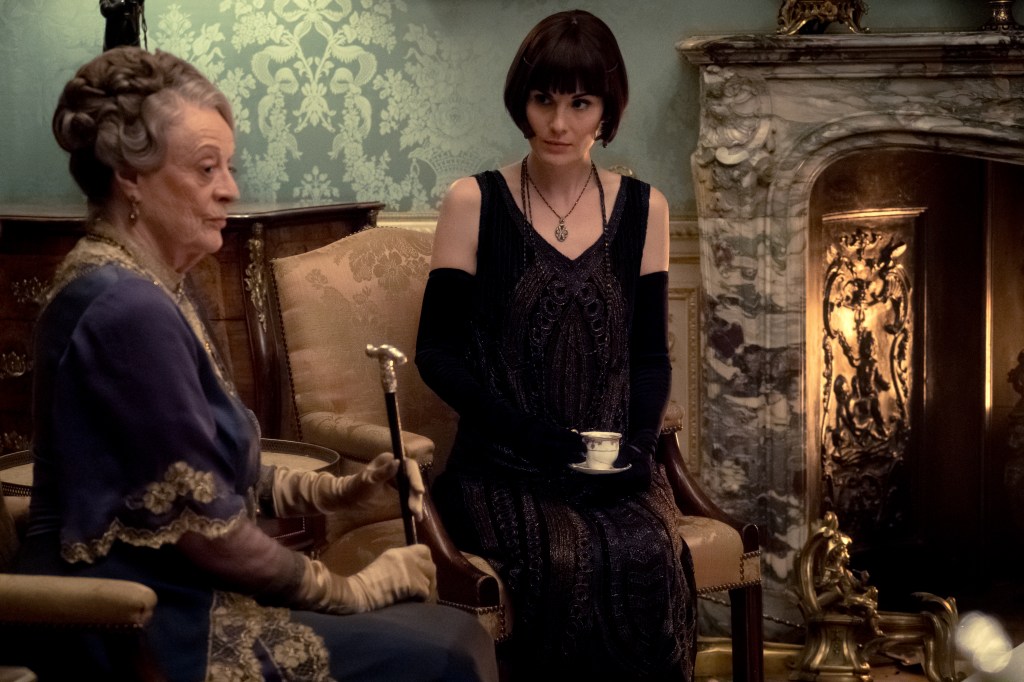
Maggie Smith delivers one of her greatest performances as Violet Crawley. Smith earned appreciation for playing the wise-cracking countess in the original television show. With “Downton Abbey”, however, she created her first cinematic portrayal of the countess. It isn’t easy to portray an aristocratic woman during the 1920’s, but she succeeds tremendously. It’s a role that gave the actress an opportunity to showcase her strengths. With riveting expressions, she captures the angst, determination and rigid social class beliefs of a wealthy upper-class British woman. It’s a phenomenal performance from a legendary actress whose larger-than-life presence will forever be sorely missed from commemorated movies following her death today.
The supporting cast is spectacular and also worthy of appreciation. Hugh Bonneville is brilliant, capturing the optimistic point of view of a wealthy British landowner struggling to make his family’s dreams come true. Michelle Dockery is magnificent, capturing the stress faced by a woman under pressure to ensure her family’s success. Lastly, Jim Carter merits appreciations. A a devoted British butler, he brings gravitas to the movie.
Despite its extraordinary performances, however, “Downton Abbey” can’t quite celebrate the legacy of a television series that’s legendary. If there’s a minor shortcoming to the movie, it lacks engaging pacing. Engler’s decisions to integrate subplots about homosexual butlers into the movie is bold but doesn’t entirely succeed. Due to this faulty decision, scenes focusing on the adventures of a gay butler in the Crawley family aren’t as engaging as the family’s journey to prepare for a visit from the royal family. Such subplots about LGBTQ communities feel suited to movies about the AIDS crisis rather than adaptations of beloved television shows. As Jonathan Demme’s “Philadelphia” suggested clearly, subplots about homosexual men elevate AIDS dramas. Therefore, “Downton Abbey” can’t quite celebrate the television show’s legacy.
Nevertheless, fans of Maggie Smith will definitely appreciate “Downton Abbey” and so will movie-goers seeking exhilarating entertainment. A beautiful television adaptation, it celebrates a famous series about British families living in a luxurious mansion.
A touching tribute towards a commemorated television series about wealthy British families building barriers of social class that are challenging, it’s a riveting reminder of a legendary actress that left behind a lasting legacy through her abilities to portray compelling characters with larger-than-life personalities whose timeless movies are definitely worth celebrating following her devastating passing that left the world mourning.
4.5/5 stars

 The Film Buff
You must be logged in to post a comment.